How to Run a Sub-30-Minute 5K

On this page
A sub-30-minute 5K means running 5 kilometers in under 30 minutes. That is about 5:59 per kilometer, or 9:39 per mile. For a new runner, it is a great first goal. You do not need talent. You need a simple plan, easy miles, and a little time. This guide gives you the pace, a simple sub-30 5K training plan, and a way to check that the goal fits your own data. Break it down, and the number stops feeling scary. It becomes a clear target you can train for.
| Point in the race | Clock time | Pace per km | Pace per mile |
|---|---|---|---|
| 1 km done | 5:59 | 5:59 | 9:39 |
| 2 km done | 11:59 | 5:59 | 9:39 |
| 3 km done | 17:59 | 5:59 | 9:39 |
| 4 km done | 23:59 | 5:59 | 9:39 |
| 5 km finish | 29:59 | 5:59 | 9:39 |
Get your own projection in seconds — free, no signup, no wearable.
5K Time PredictorWhat pace is a sub-30 5K?
A sub-30 5K is about 5:59 per kilometer. In miles, that is about 9:39 per mile. You hold this pace for all 5 kilometers. The table above shows the clock at each kilometer. At 1 km, your watch reads 5:59. At 2 km, it reads 11:59. At 3 km, 17:59. At 4 km, 23:59. You cross the line at 29:59.
The key word is even. You run the same pace the whole way. Many new runners start too fast. They feel good for the first kilometer. Then they fade and lose time. Even pacing fixes that. Aim to run close to 6:00 per kilometer from the first step.
This pace should feel steady. Not easy, and not all-out. You should be able to say a few words, but not chat freely. If you can sing, you are too slow. If you cannot talk at all, you are too fast. Practice this pace in training. Then it feels normal on race day.
Is a 30-minute 5K a good time?
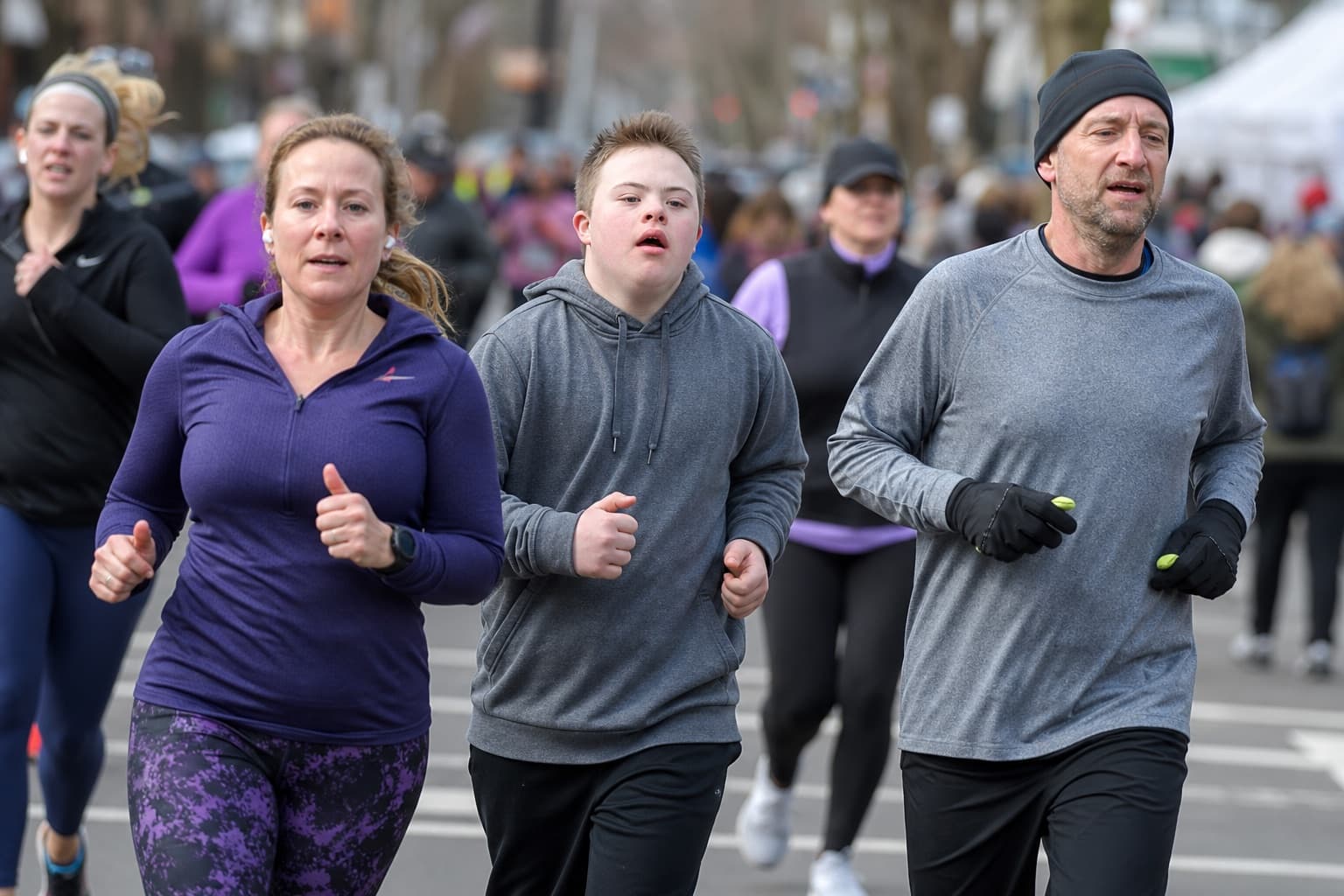
Yes, a 30-minute 5K is a good time for most everyday runners. It puts you near the middle of a typical local 5K field. One study looked at 20,191 first-time adult runners at free 5K events in Scotland (Gilburn, 2023). Most everyday runners finish a 5K somewhere between 25 and 35 minutes. A sub-30 time sits right in that band.
A 30-minute 5K also means real fitness. You are running for half an hour without stopping. That is a clear sign of a healthy heart and strong legs. For a brand new runner, breaking 30 minutes is a big win. It is the first milestone many runners chase.
Do not compare yourself to elite times. The world record for 5K is under 13 minutes. That number is not your measure. Your own progress is. If 30 minutes is faster than your last 5K, it is a good goal. Chase your own best, not someone else's.
- 20,191
- first-time 5K runners studied at free events in Scotland (Gilburn, 2023)
How long does it take to train for a sub-30 5K?
Most new runners can train for a sub-30 5K in 8 to 12 weeks. The exact time depends on where you start. If you can already jog for 20 minutes, you may need only a few weeks. If you are starting from the couch, plan for 10 to 12 weeks. Either way, the goal is in reach.
Your body adapts faster than you think. One study followed beginners in a running program. Their fitness improved within 10 weeks (Stevinson et al., 2022). Another study of a 6-week beginner plan found it raised health and activity levels (Ooms et al., 2013). The early gains come quickly.
Be patient with the clock. Some weeks you feel fast. Some weeks you feel slow. That is normal. Fitness does not rise in a straight line. Trust the weeks. Keep showing up. The pace gets easier as your engine grows. The seconds follow the work.
What does a sub-30 5K training plan look like?
A simple sub-30 5K training plan uses three runs a week. Most of those runs are easy and slow. One run each week is a bit faster. That mix builds your engine and your speed at the same time.
Here is the shape of a week. The first run is easy. It is slow and relaxed. You can talk the whole time. The second run is faster. You run short bursts near race pace, with rest between them. The third run is a longer easy run. It builds the time on your feet.
Keep your easy runs truly easy. This is the part most runners get wrong. Elite runners spend about 80 percent of their training at an easy effort (Seiler, 2010). Only 20 percent is hard. Easy running builds the base. The faster run sharpens your top speed.
If you cannot run for 30 minutes yet, use a walk-run plan. Run for one minute. Walk for one minute. Repeat. Over the weeks, run more and walk less. Soon you will run the whole way. To learn the right effort for each run, see training paces explained.
Why should beginners build up slowly?
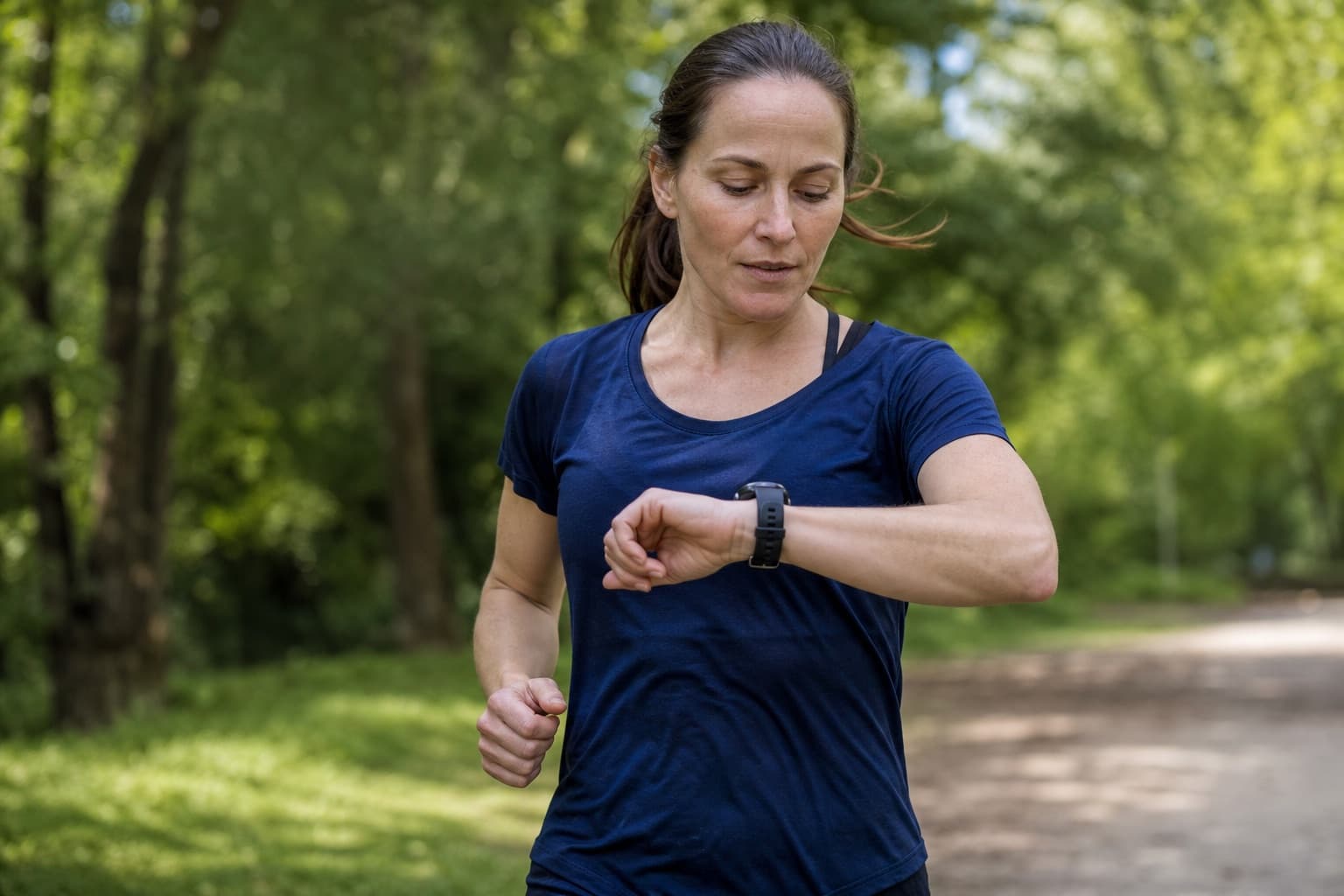
Beginners should build up slowly because new runners get hurt the most. A large review found that novice runners had 17.8 injuries per 1000 hours of running (Videbæk et al., 2015). More experienced runners had less than half that rate. Your body needs time to get strong.
The fix is simple. Add a little each week, not a lot. A good rule is to raise your weekly running time by about 10 percent at most. Some weeks, hold steady. Rest days matter too. Your legs get stronger while you rest, not while you run.
Watch for warning signs. Sharp pain is a stop sign. An ache that grows worse each day is a stop sign. A little tiredness is fine. Real pain is not. Slow growth keeps you healthy. A healthy runner who trains for 10 weeks beats an injured one who pushed too hard in week three.
- 17.8
- injuries per 1000 hours of running for novice runners (Videbæk et al., 2015)
How do you know if the sub-30 goal fits you?
You know the goal fits when your own data shows you are close. A goal should stretch you, not break you. If your current 5K is 31 minutes, sub-30 is right there. If it is 40 minutes, sub-30 is a longer project. Both are fine. You just need a real starting point.
This is where guessing fails most runners. A one-size-fits-all calculator takes one race time and spits out a number. It treats every runner the same. It does not see your easy runs. It does not see how steady your training has been. So its answer can be far off.
A better way is to use your real training data. Your easy runs, your faster runs, and your weekly load all hold clues. Together they show what pace you can hold now. To check if a time is a fair target, read is my goal time realistic.
How should you pace the race itself?
Start slower than you think. The first kilometer should feel easy. New runners burn their energy too soon. They sprint the start and crawl the finish. Hold back early. Save your legs for later.
Use your watch and the table above to stay on pace. Check your time at each kilometer. If you are ahead of 5:59, ease off a touch. If you are behind, lift the effort a little. Small fixes keep you on track.
The last kilometer is where the goal is won. If you paced it well, you will have something left. Push the final stretch. Many runners find an extra gear in the last 500 meters. That is where you steal back seconds. Cross the line at 29:59 or faster, and the goal is yours.
Why does PIRX beat a one-size-fits-all calculator?
PIRX beats a one-size-fits-all calculator because it learns you. A single fixed formula uses one math rule for every runner. PIRX is different. It is a proprietary machine-learning prediction engine. It reads your real runs from your watch.
PIRX breaks your fitness into five drivers. They are Aerobic Base, Threshold Density, Speed Exposure, Load Consistency, and Running Economy. Each one is scored. The scores show where your seconds come from. The lowest score is your biggest chance to improve. PIRX might show that a thin Aerobic Base costs you 25 seconds on your 5K. Now you know what to fix.
You get a Projected Time for your 5K. It comes with a Supported Range. That range shows the band of likely finish times. PIRX recalculates after every synced activity. A change in your number shows only when the real shift is at least 2 seconds. So you see true progress, not random noise. For the full picture, see the five performance drivers that set your race day ceiling.
- 98%
- validated prediction accuracy (PIRX users)
See if a sub-30 5K is your number
Stop guessing what your training is worth. Do not rely on generic watch math that treats every runner the same. Connect your Garmin, COROS, or Strava to PIRX in under a minute. See your five performance drivers. Find out exactly where your seconds come from. Get a clear, accurate projection for your 5K. Check if a sub-30 5K is inside your Supported Range before you start the block. Free, no signup needed.
Get your own projection in seconds — free, no signup, no wearable.
5K Time PredictorSources
- Gilburn, A.S. (2023). Predictors of successful return to parkrun for first-time adult participants in Scotland. PLOS Global Public Health, 3(8). (Dataset of 20,191 first-time adult participants across free 5 km parkrun events in Scotland.)
- Stevinson, C. et al. (2022). Adherence and Health-Related Outcomes of Beginner Running Programs: A 10-Week Observational Study. Research Quarterly for Exercise and Sport. (Beginner running programs were linked to improved fitness within 10 weeks.)
- Ooms, L., Veenhof, C. & de Bakker, D.H. (2013). Effectiveness of Start to Run, a 6-week training program for novice runners. BMC Public Health, 13, 697. (A short beginner program raised health-enhancing physical activity in new runners.)
- Seiler, S. (2010). What is best practice for training intensity and duration distribution in endurance athletes? Int J Sports Physiol Perform, 5(3), 276-291. (Elite endurance athletes train roughly 80 percent easy and 20 percent hard.)
- Videbæk, S., Bueno, A.M., Nielsen, R.O. & Rasmussen, S. (2015). Incidence of Running-Related Injuries Per 1000 h of running in Different Types of Runners. Sports Medicine, 45(7), 1017-1026. (Novice runners had 17.8 injuries per 1000 hours, far higher than recreational runners.)
Already know your number? Start your 14-day free trial