How to Run a Sub-40-Minute 10K

On this page
A sub-40 10K means running about 4:00 per kilometer, or about 6:26 per mile, for all 6.2 miles. That pace adds up to 39:59 over 10 kilometers. It is a big step up from a sub-50 10K. The pace is faster, and the room for error is smaller. To get there, one driver matters most. It is Threshold Density. You build it with hard threshold runs and fast intervals, stacked on high weekly mileage.
| Sub-40 10K marker | Target | Detail |
|---|---|---|
| Goal pace | ~4:00 per km | About 6:26 per mile, held the whole way |
| 2 km split | 7:59 | Even 4:00 per km |
| 4 km split | 15:59 | Even 4:00 per km |
| 6 km split | 23:59 | Even 4:00 per km |
| 8 km split | 31:59 | Even 4:00 per km |
| Finish (10 km) | 39:59 | Average 4:00 per km |
| Weekly mileage | 65 to 90 km (40 to 56 miles) | Mostly easy, plus 2 quality days |
| Threshold workout | 4 to 6 km at threshold | e.g. 5 x 1 km near 4:05 per km, short jog rest |
| Interval workout | VO2-style fast reps | e.g. 5 to 6 x 1 km near 3:45 per km, equal jog |
Get your own projection in seconds — free, no signup, no wearable.
10K Time PredictorWhat pace is a sub-40 10K?
A sub-40 10K is an even pace of about 4:00 per kilometer, which is about 6:26 per mile. The math is simple. A 10K is 10 kilometers. Run each one in 4:00, and you finish in 40:00 flat. To slip just under, you need 39:59. That is a hair under 4:00 per km the whole way.
- ~4:00 / km
- even pace needed for a sub-40 10K (about 6:26 per mile)
Check your pace at set points on the course. Pass 2 km at 7:59. Pass 4 km at 15:59. Pass 6 km at 23:59. Pass 8 km at 31:59. Hit those marks, and you are on track for 39:59.
This pace leaves little slack. A sub-50 runner can drift a few seconds and still recover. At sub-40, a fast start can wreck the whole goal. So even splits are not a nice idea here. They are the plan.
If 4:00 per km feels far off today, start one rung lower. The sub-50 10K guide shows the easier version of this goal and how to build toward it.
What does it take to run a sub-40 10K?
It takes a high lactate threshold, real weekly mileage, and regular fast work. The sub-40 10K is a competitive time. Most runners reach it after months of focused training, not a few weeks.
Start with the term that matters most. Your lactate threshold is the fastest pace you can hold before waste builds up faster than your body clears it. Push past it, and you slow down fast. Research shows the lactate threshold is among the strongest predictors of distance running performance (Faude et al., 2009). For the 10K, it is the number that rules your race.
Your 10K pace sits right at or just above this threshold. So to break 40, your threshold pace must be close to 4:00 per km. Lifting that threshold is the whole job.
Trained runners are set apart by three things. Their top aerobic power. Their lactate threshold. And their running economy, which is how little fuel they burn at a set pace (Midgley et al., 2007). A sub-40 plan trains all three. But the lactate threshold is the one you feel most on race day.
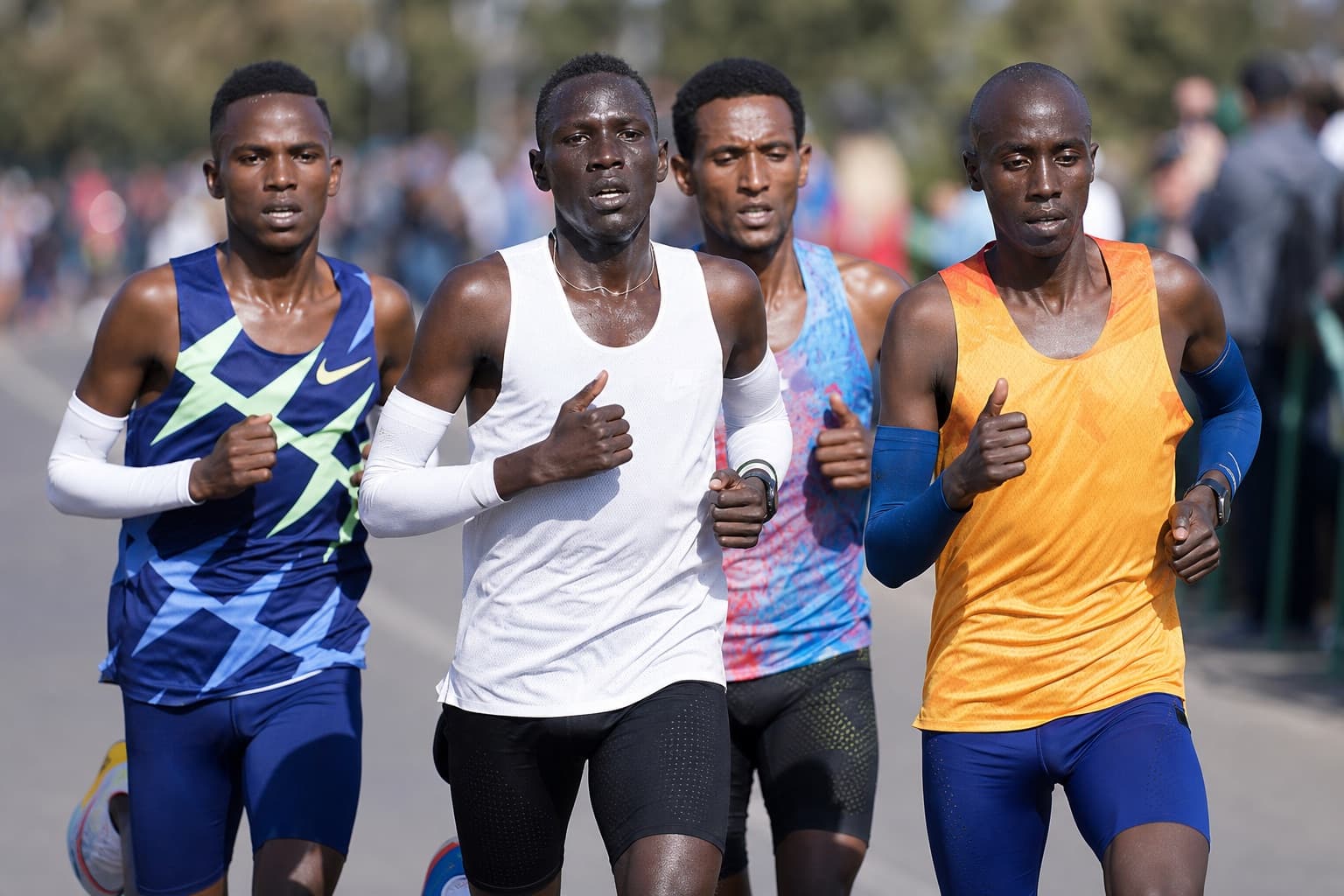
Why is Threshold Density the key to a sub-40 10K?
Threshold Density is the key because the 10K is run right at your threshold, and a sub-40 demands a high one. Threshold Density is how much quality work you do near your threshold pace, week after week.
The link is direct. The more often you train at or near threshold, the higher that threshold climbs. A higher threshold means 4:00 per km feels steady, not frantic. It means you hold form deep into the race instead of falling apart.
This is where the sub-40 splits from the sub-50. A sub-50 is built mostly on easy base miles. A sub-40 still needs that base. But it also needs a thick layer of threshold work on top. The base alone will not pull you to 4:00 per km. You have to teach your body to live near the threshold.
So Threshold Density is the driver to grow first. You feed it with steady, comfortably hard running done often. Not one token tempo run a month. A regular, repeated dose, held week after week, is what moves the number.
What threshold and interval workouts build a sub-40 10K?
Two sessions do most of the work. A threshold run and a set of fast intervals. Do one of each most weeks, with easy running around them.
A threshold run is a comfortably hard effort. It is the pace you could just hold for about an hour in a race. For a sub-40 runner, that sits near 4:05 to 4:10 per km. A common session is 5 times 1 km at that effort, with a short jog between each. A steady 20 minute block at threshold works too. This is the session that grows your Threshold Density.
Intervals are short, fast reps with rest between them. They run faster than race pace. For example, 5 to 6 times 1 km near 3:45 per km, with an equal easy jog to recover. These reps push the top speed of your aerobic engine.
Why do fast reps matter for a race that is not a sprint? Because your race pace is a fraction of your top aerobic speed. Training near the speed at your highest aerobic power raises that ceiling (Billat, 2001). When the ceiling rises, 4:00 per km drops from near-maximal to controlled. In PIRX terms, those reps build your Speed Exposure.

How much should you run each week for a sub-40 10K?
Plan for about 65 to 90 km a week, which is roughly 40 to 56 miles, and keep most of it easy. That is more than a sub-50 plan asks for. The extra easy volume builds the engine that lets you handle two hard days a week without breaking down.
Easy means a pace where you can talk in full sentences. It should feel relaxed. This is not the part of the week where you chase the clock. The easy miles do quiet work. They grow your base and help your body soak up the hard sessions.
Even at this level, most of your running stays easy. In one study of trained runners, the group that kept the largest share of training at easy effort improved its 10K-type race time more than the group that did more moderate, hard running (Esteve-Lanao et al., 2007). More easy volume, run truly easy, paid off the most.
Raise your weekly distance slowly. No more than about 10 percent at a time, then hold steady before you climb again. In PIRX terms, that steady, week-over-week buildup is your Load Consistency. It is one of the five drivers that set your race day ceiling.
How do you pace a sub-40 10K on race day?
Run even splits and respect the first 2 km. The pace is fast enough that a hot start will end your sub-40 try before halfway.
Aim to reach each mark right on time, not ahead of it. Pass 2 km near 7:59, 4 km near 15:59, 6 km near 23:59, and 8 km near 31:59. If your watch shows those numbers, the finish takes care of itself.
The first kilometer feels easy. That is the trap. Your legs are fresh and the start line pulls you fast. Bank 15 seconds early at this pace, and you can lose a minute late, when your legs turn to lead.
The middle kilometers are where the race is won. Lock onto 4:00 per km and stay smooth. Keep your breathing even. This is where your threshold work pays you back, because the effort stays just under the line.
The last 2 km are for what you have left. If you paced the first 8 km well, you can hold or lift slightly to the line. If you do not know whether your base or your speed is the bigger gap, read aerobic base vs speed exposure for the 10K.
Why does PIRX beat a one-size-fits-all 10K calculator?
A static calculator treats every runner the same, while PIRX learns from your real runs. Type your last race into a one-size-fits-all calculator, and it spits out a number from a single fixed formula. It cannot see your threshold work. It cannot see your mileage. So it gives the same answer to a runner who needs more threshold runs and a runner who needs more easy miles.
PIRX is a proprietary machine-learning prediction engine. It reads your actual training, not just one race time. It scores your Aerobic Base, Threshold Density, Speed Exposure, Running Economy, and Load Consistency. Then it shows where your seconds come from. The driver scores add up to your total improvement, measured in real seconds, not vague percents.
It gives you a Projected Time for your 10K, plus a Supported Range that shows the spread of likely finishes given your current fitness. So you learn whether a sub-40 10K is in reach or still weeks away. The projection recalculates after every synced activity. A visible change shows only when the structural change is at least 2 seconds, so you see real progress, not noise.
If you want the full picture, read the guide to the five performance drivers that set your race day ceiling.
- 98%
- validated prediction accuracy (PIRX users)
See if a sub-40 10K is in your range
Stop guessing what your training is worth. Do not rely on generic watch algorithms that treat every runner the same. Connect your Garmin, COROS, or Strava to PIRX in under 30 seconds. See your five performance drivers, find where your seconds are coming from, and get a clear Projected Time with a Supported Range for your 10K. Then you will know if 4:00 per km is in reach today, or exactly what to train to get there.
Get your own projection in seconds — free, no signup, no wearable.
10K Time PredictorSources
- Faude, O., Kindermann, W. & Meyer, T. (2009). Lactate Threshold Concepts: How Valid Are They? Sports Medicine, 39(6), 469-490. (The lactate threshold is among the strongest predictors of endurance and distance running performance.)
- Midgley, A.W., McNaughton, L.R. & Jones, A.M. (2007). Training to Enhance the Physiological Determinants of Long-Distance Running Performance. Sports Medicine, 37(10), 857-880. (Distance performance is set by maximal oxygen uptake, lactate threshold, and running economy.)
- Billat, L.V. (2001). Interval Training for Performance: A Scientific and Empirical Practice. Sports Medicine, 31(1), 13-31. (Training near the velocity at maximal oxygen uptake raises the top of the aerobic range.)
- Esteve-Lanao, J., Foster, C., Seiler, S. & Lucia, A. (2007). Impact of Training Intensity Distribution on Performance in Endurance Athletes. J Strength Cond Res, 21(3), 943-949. (Trained runners who kept more training at easy effort improved their 10K-type race time the most.)
Already know your number? Start your 14-day free trial