Your First 50K: Bridging the Gap From Marathon to Ultra

On this page
A 50K is not just a marathon plus 5 kilometers. It is a different race. The distance is only 4.9 miles longer. But on trails a 50K can take up to twice as long as a road marathon. What changes is time on feet, fueling, terrain, and pace. If you have already run a marathon, you have the base. Now you bridge the gap.
| What changes | Road marathon | First trail 50K |
|---|---|---|
| Goal pace | A steady pace per mile you chase | Slower, paced by feel, not a watch number |
| Long run | Measured in distance, up to about 20 miles | Measured in time, plus back-to-back long days |
| Fueling | A few gels, water every mile | Hours of eating, carried fluid, a trained gut |
| Climbs | You run them | You hike the steep ones on purpose |
Get your own projection in seconds — free, no signup, no wearable.
Race Time PredictorHow hard is a 50K compared to a marathon?
A 50K is much harder than the extra distance suggests. The race is only 4.9 miles longer than a marathon. But the effort is far bigger. On trails, a 50K can take 1.5 to 2 times as long as a road marathon (UltraSignup).
Why is it so much more? Three reasons. The ground is slower. The hills are steeper. The hours pile up. A road marathon might take you 4 hours. A trail 50K might take 6 or 7. Your body has to keep moving, eating, and drinking the whole time.
So the real test is not speed. It is endurance over many hours. Most first-time 50K runners say the same thing. The time on their feet, not the raw distance, is what they had to train for.
- 2x
- how much longer a trail 50K can take than a road marathon (UltraSignup)
How much more should you run for a 50K?
Less than you might think. Your training does not double. A 50K does not need twice the marathon training (CTS). What it needs is the right kind of work, not just more of it.
One ultra coaching group sets a clear target. To be ready for a 50K, you should be able to train at least 6 hours per week for 3 key weeks before your race (CTS). That is your peak load. The other weeks can be lower than that.
If you trained for a marathon, you already run 4 to 5 days a week. Keep that habit. Add a little volume. Then shift your focus from speed to time. For a wider view, see how many miles per week you should run.
Why does time on feet matter more than pace?
For a 50K, the clock on your feet matters more than your pace per mile. This is the biggest shift from the marathon mindset.
In a road marathon, you chase a pace. You aim for a steady number per mile. On a trail 50K, that number means little. Running through rocks is slower than running on smooth gravel, even at the same effort (UltraSignup). So you pace by feel, not by your watch.
Coaches put it simply. A mile does not always equal a mile. But an hour always equals an hour (UltraSignup). Ten miles in the mountains can take twice as long as ten flat miles. So you train by time. Instead of an 18-mile long run, you run for 3 hours. Your body learns to keep going long after a marathon would have ended.
This is also why the late miles feel so hard. Read more about why your legs fade near the end of a marathon and how to push that wall back.
What are back-to-back long runs?
Back-to-back long runs are two long runs on two days in a row. They are the key ultra workout. They teach your legs to run while tired.
Here is the problem they solve. You cannot safely run 40 miles in one go. The injury risk is too high. So you split the load. You run long on Saturday. Then you run long again on Sunday on tired legs (COROS).
The second run is the magic. It copies the feeling of the last hours of a 50K, when your legs are already worn down (COROS). You learn to move, eat, and stay calm in that state. For beginners, two or three back-to-back weekends before the race is enough.
Make the first day the harder one. Make the second day slow and easy. A common start is 30 to 40 miles total across the two days (COROS).
How do you train your gut for a 50K?
You train your gut like a muscle. A 50K means hours of eating while running. If your stomach is not used to it, it will quit before your legs do.
The science is clear. For races over 2.5 hours, the target is around 90 grams of carbohydrate per hour (Viribay et al., 2020). That is a lot of food to take in while moving. An untrained gut cannot handle it.
The fix is gut training. You practice eating during your long runs. You start small. You build up the amount week by week. Research shows trained athletes can take in even more, up to 120 grams per hour, without a sick stomach (Viribay et al., 2020). Use your back-to-back runs to test your real race food. Never try a new gel on race day.
- 90 g/h
- carbohydrate target for efforts over 2.5 hours (Viribay et al., 2020)
Why should you hike the hills?
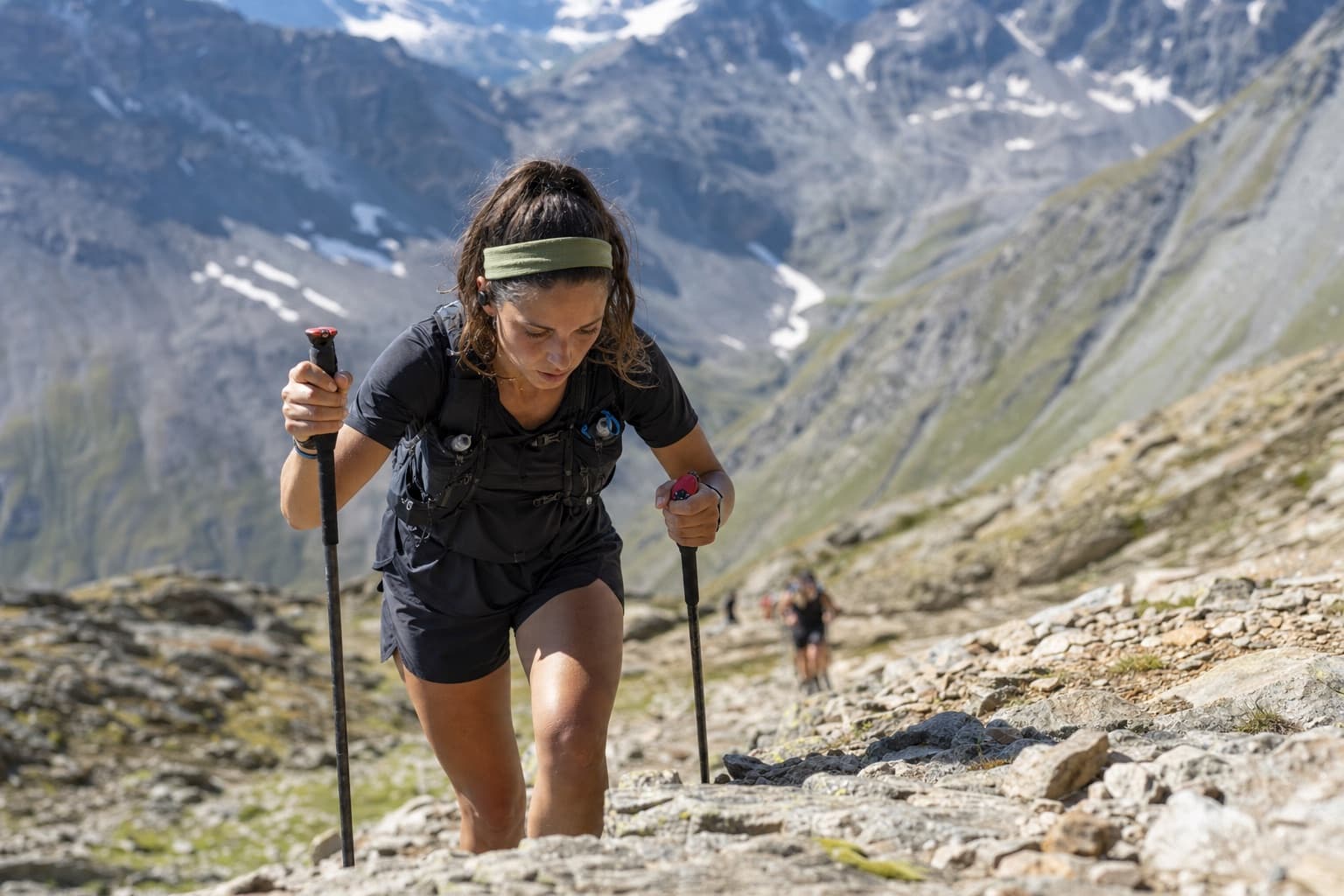
You should hike the steep hills on purpose. In an ultra, walking is a skill, not a failure. Even strong runners hike the climbs.
On a hilly 50K, there are long stretches of hiking (UltraSignup). Power hiking up a steep grade saves energy. Often it is not much slower than a grinding run anyway. Save your running legs for the flats and the downhills.
So practice it. Hike the climbs in training until it feels normal. Train your downhills too, but with care. Too much hard downhill running causes deep muscle damage that needs long recovery (UltraSignup). A little goes a long way. If your course has a lot of climbing, match it. Aim to cover your race's total elevation gain across a normal training week (UltraSignup).
What gear and race skills do you need?
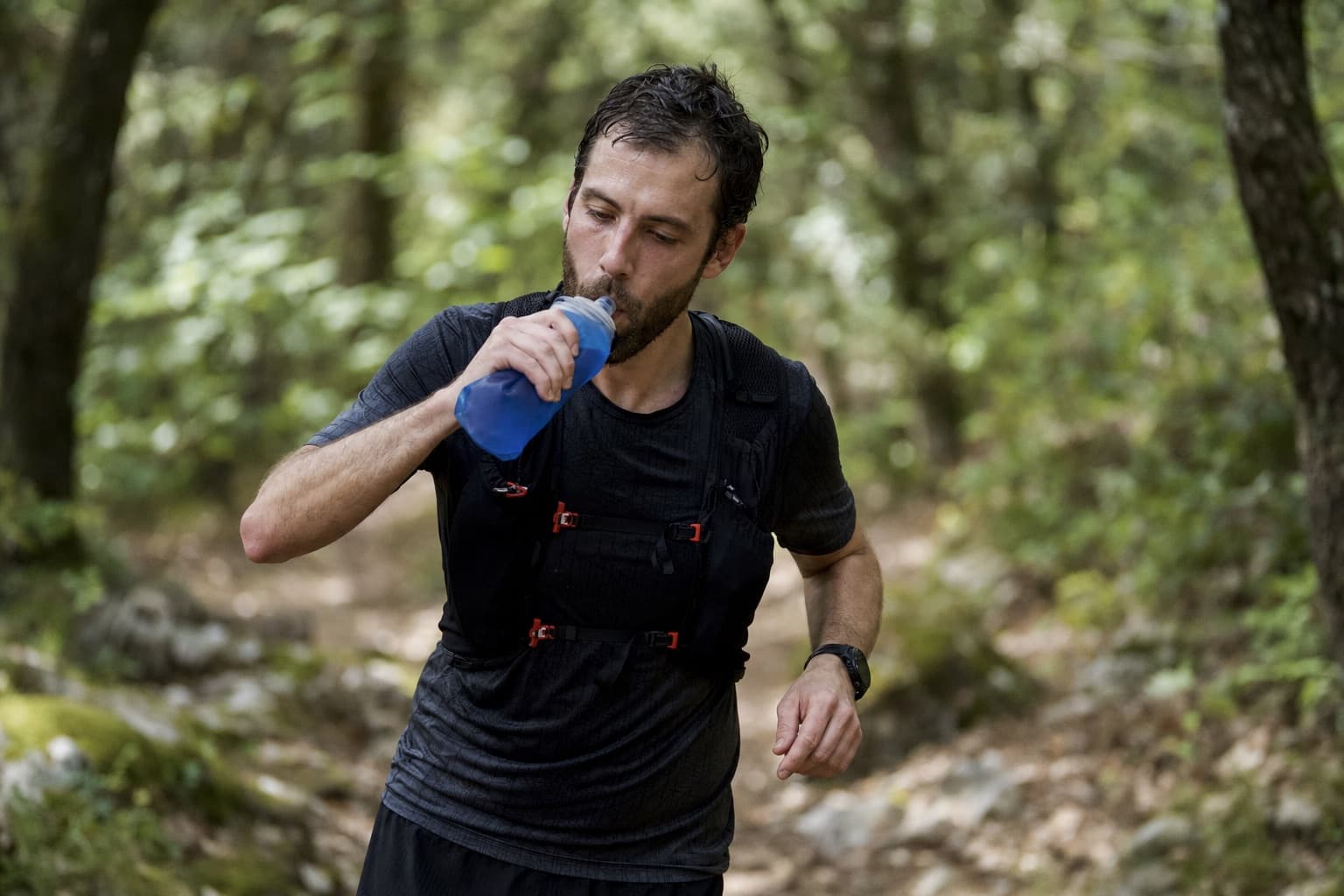
A 50K needs gear a road marathon does not. The main one is fluid. Aid stations on trails are far apart, not every mile (UltraSignup). So you carry your own water in a vest or a handheld bottle.
A hydration vest also holds your food, a phone, and a layer. Keep it light. Carrying about 5 percent of your body weight is fine (UltraSignup). Much more than that changes the way you run.
Learn the course too. Know where the aid stations are. Know the big climbs. Many trail courses are marked, but runners still take wrong turns (UltraSignup). Study the map. Load the route on your watch. Trail racing rewards the runner who plans ahead.
What goal pace should you expect?
Slower than you hope, and that is fine. Your 50K pace will sit well under your road marathon pace (UltraSignup). The hills, the rough ground, and the long hours all slow you down. That is normal for every first ultra.
Many first-timers make one mistake. They start at a road marathon effort. Then they fade badly halfway through. The fix is to start easy. Walk the early climbs. Keep your effort low for the first half. Save your energy for the back third, where the race is really decided.
A good first 50K goal is simple. Finish strong and steady. Chasing a fast time can wait for your second ultra, once you know how your body handles the distance.
Where does PIRX fit for your first 50K?
PIRX builds the marathon foundation your 50K stands on. Be clear on one thing first. The PIRX race predictor covers distances up to the marathon. It does not predict a 50K time. The ultra is beyond what a calculator can model well, because trails, climbs, and weather change too much from race to race.
So use PIRX for the part it does best. PIRX is a proprietary machine-learning prediction engine. It reads your real runs, not just one race result. It scores five drivers that set your ceiling: Aerobic Base, Threshold Density, Speed Exposure, Load Consistency, and Running Economy.
For a future ultra runner, two of those matter most. Aerobic Base is your engine, grown from easy volume. Load Consistency is how steadily you stack training without breaks. A 50K is built on both. PIRX shows you each score from 0 to 100 and tells you the gap in seconds on your marathon. A strong marathon base is the best launch pad for a first 50K. For the timeline, see how many weeks it takes to train for a marathon.
Unlike a one-size-fits-all calculator, PIRX learns your own pattern. It recalculates after every synced activity. You see a real change only when it is at least 2 seconds, so you track true progress, not random noise.
- 98%
- validated prediction accuracy (PIRX users)
Build the marathon base your 50K needs
Your first 50K starts with a strong, steady marathon engine. That is the part you can measure and grow right now. Connect your Garmin, COROS, or Strava in under a minute. See your Aerobic Base and Load Consistency scores. Find the gap that holds your endurance back. Then build the base your ultra will stand on. Free, no signup needed. New to base work? Start with the base building phase every runner needs.
Get your own projection in seconds — free, no signup, no wearable.
Race Time PredictorSources
- UltraSignup (Trailhead Media). Transitioning From a Marathon to a 50K. (A trail 50K can take 1.5 to 2 times as long as a road marathon; pace by effort, train by time, hike the climbs, and carry your own fluid.)
- CTS. How Long Does It Take To Train For An Ultramarathon? (Training does not scale linearly from the marathon; aim for a peak of at least 6 hours per week for 3 weeks before a 50K.)
- Viribay, A. et al. (2020). Effects of 120 vs. 60 and 90 g/h Carbohydrate Intake during a Trail Marathon on Neuromuscular Function and Recovery. Nutrients, 12(7), 2094. (The recommendation for events over 2.5 hours is around 90 g/h of carbohydrate; gut training lets athletes tolerate up to 120 g/h without serious stomach problems.)
- COROS Coaches. Double the Fun: Back-to-Back Long Runs. (Two long runs on consecutive days build endurance and teach the body to run in a fatigued state; beginners start with 30 to 40 miles total.)
Already know your number? Start your 14-day free trial