Strength Training for Runners: What Actually Works
On this page
Runners need strength training. Two to three short sessions a week can improve running economy by 2 to 8 percent, and cut injury risk to about a third of normal. The key moves are heavy, simple, and few. You do not need a bodybuilder's routine, just the right basics done well and done often enough to matter.
The table below shows the key lifts, why they help runners, and how often to do them.
| Movement | Benefit for runners | Frequency |
|---|---|---|
| Squat | Builds leg and hip power for a stronger push-off | 1 to 2 times a week |
| Deadlift or hip hinge | Strengthens hamstrings and glutes, common weak spots | 1 to 2 times a week |
| Single-leg step-up | Trains each leg alone, closer to a running stride | 1 to 2 times a week |
| Calf raise | Builds calf and Achilles strength, lowers injury risk | 2 times a week |
| Plank and side plank | Builds core control for a stable running form | 2 to 3 times a week |
Get your own projection in seconds — free, no signup, no wearable.
Race Time PredictorDo runners need strength training?
Yes. Strength training helps in two clear ways. It can improve running economy. It can also lower injury risk. Both come from real studies, not gym folklore.
For economy, one review checked 24 studies. It covered 469 runners. Economy improved in most trials. Gains often hit 2 to 8 percent after strength work (Blagrove et al., 2018). Less fuel burned at the same pace. That often means a faster finish.
For injury, the proof is even stronger. A large review checked over 7,700 athletes. It spanned six studies. Strength training cut injury risk to about one third of normal. That is close to a two-thirds drop (Lauersen et al., 2018). Running is a repeat-motion sport. Many running injuries come from overuse, not accidents. Strength work builds tissue that can take more load before it breaks down.
Think about what a runner's leg absorbs. Each foot strike sends force up through the foot, shin, knee, and hip. Over one mile, that can add up to thousands of small impacts. Weak tissue tires under that load and breaks down over time. Strong tissue handles the same load with room to spare. That gap is where strength training earns its keep.
This is why strength training pays off most for runners who log high weekly mileage. More miles mean more repeated impact on the same joints and tendons. A stronger base gives those tissues a bigger buffer before small aches turn into a real injury that costs you weeks off.
- ~2/3 lower
- the drop in sports injury risk with strength training (Lauersen et al., 2018)
How much strength training actually helps?
More strength work, up to a point, means more protection. The same review found a clear pattern. Runners who did more volume saw a bigger drop in risk. A 10 percent rise in volume linked to a further 4 point drop in risk (Lauersen et al., 2018).
This does not mean more is always better. The studies used modest plans. Most ran two sessions a week over many weeks. The point stands either way. Some strength work beats none at all. A bit more, done well, tends to help a bit more.
There is a limit, though. Piling on strength sessions while also raising your running mileage is a fast way to get hurt or worn out. Fit strength work into the training you already do. Do not stack it on top without cutting back somewhere else.
For economy, heavy weights beat light, high-rep sets. One study compared heavy lifts to jump training. Heavy lifting won. The gain was bigger and more steady. This held even more near a runner's true max load (Eihara et al., 2022). This is why the table above uses low reps and real weight, not light dumbbells.

What are the key lifts for runners?
The best lifts hit the legs, hips, and core with simple, heavy moves. You do not need a long list. A short, focused plan beats a scattered one.
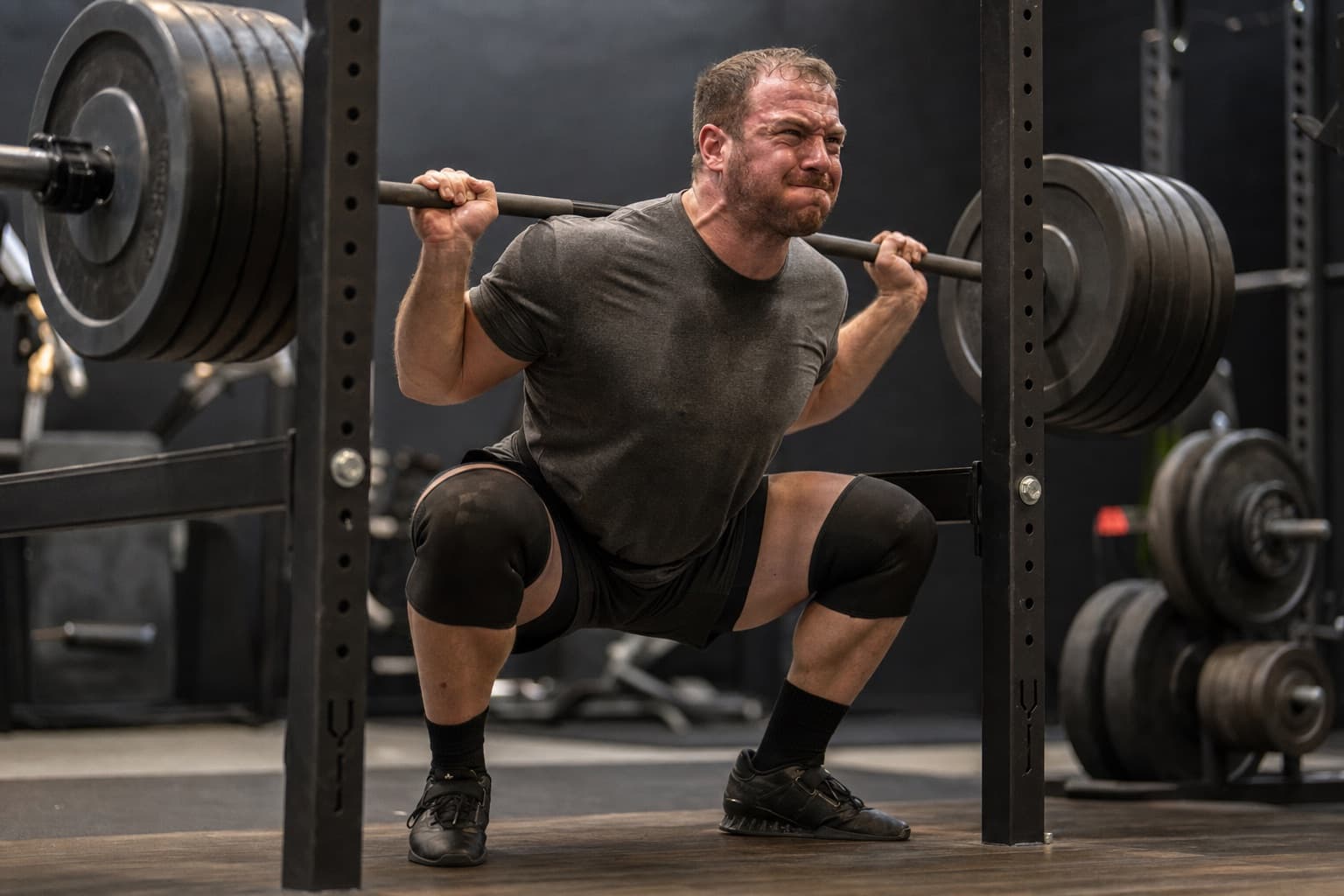
A squat builds power through the hips and knees. It trains the push-off in every stride. A deadlift, or a hip hinge move like a Romanian deadlift, works the hamstrings and glutes. These muscles often stay weak in runners who only run.
A single-leg step-up matters for a simple reason. Running is a one-leg sport. You never push off two feet at once. Training one leg at a time closes gaps that two-leg lifts miss. Calf raises build the calf and Achilles tendon. This tendon is a common site of running injury. Planks and side planks build core control. That control keeps your form steady, mile after mile.
A simple weekly plan might look like this. Monday: squats, step-ups, and a plank. Thursday: deadlifts, calf raises, and a side plank. That is two sessions. It fits most training weeks without crowding out your key runs. Add a third short session later, once the first two feel easy and recovery stays on track.
How often should runners lift?
Most runners get strong results from two to three short sessions a week. Studies on distance runners used this exact range. Plans of 6 to 14 weeks built strength and economy. They did not hurt running performance (Blagrove et al., 2018).
Keep each session to 30 to 45 minutes. Pick two or three main lifts. Add one core move. Do 3 to 4 sets of 4 to 8 reps on the main lifts. Rest fully between sets, about 2 minutes. This is heavy, low-rep work. It is not a cardio-style circuit.
Timing matters too. Lift on an easy run day. Or lift right after an easy run. Skip a hard lift the day before a key workout or a race. Your legs need to feel fresh when it counts most. This same balance shapes your full training week, which we cover in training paces explained.
New to lifting? Start lighter than you think you need. Learn the movement first. Add weight slowly over a few weeks. A coach or a few sessions with a trainer can help you learn safe form on the squat and deadlift. Good form matters more than heavy weight in your first month. Rushing to add weight before your form is solid is the fastest way to get hurt in the gym instead of on the road.

Will strength training make me too bulky to run fast?
No. This worry is common. But the research does not back it up. Studies on runners doing heavy strength work found no real change in body mass (Blagrove et al., 2018). Two or three sessions a week, at runner-sized loads, is not a bodybuilding program.
The gains mostly come from your nerves learning to use muscle better. Stiffer tendons help too. Both changes make you run cleaner. Neither packs on the kind of bulk that would slow you down. Pairing strength work with form drills can sharpen these gains further. See our guide to running form drills for moves worth adding.
Compare this to a sport like bodybuilding. That training uses high reps, short rest, and constant muscle fatigue on purpose. Runner strength training does the opposite. It uses low reps, full rest, and heavy but brief effort. The two styles build very different bodies, even with some of the same exercises. A runner lifting for economy and injury protection should always favor the second, heavier style, not the first one.
How does PIRX see your strength work?
PIRX reads your training data. It reflects strength work through two of its five drivers: Running Economy and Load Consistency. Running Economy shows how well you use energy at your paces. Load Consistency shows if your training, strength included, builds steadily without risky spikes.
A generic calculator cannot see any of this. It only knows your last race time. It cannot say if two lifting sessions a week would cut your injury risk or lift your economy. It has no idea by how much. It also cannot warn you if your strength volume is climbing too fast alongside your mileage.
PIRX is a proprietary machine-learning prediction engine. It learns your training patterns, strength work included. It shows exactly where your seconds come from, across all five drivers: Aerobic Base, Threshold Density, Speed Exposure, Load Consistency, and Running Economy. Sports medicine research has called strength training rare among training tools. It is both safe and dose-dependent. More of it, done right, tends to help more.
- 98%
- validated prediction accuracy (PIRX users)
Train stronger, not just harder
Stop guessing whether your strength work is paying off. Don't rely on generic watch algorithms that treat every runner the same. Connect your Garmin, COROS, or Strava to PIRX in under 30 seconds. See your Running Economy and Load Consistency scores next to your other three drivers, and get your race-time projection.
Get your own projection in seconds — free, no signup, no wearable.
Race Time PredictorSources
- Blagrove, R.C., Howatson, G. & Hayes, P.R. (2018). Effects of strength training on the physiological determinants of middle- and long-distance running performance. Sports Medicine. (24 studies, 469 runners; running economy improved 2 to 8 percent, body composition unaffected, best results from 2 to 3 sessions a week over 6 to 14 weeks.)
- Lauersen, J.B., Andersen, T.E. & Andersen, L.B. (2018). Strength training as superior, dose-dependent and safe prevention of acute and overuse sports injuries. British Journal of Sports Medicine. (7,738 athletes, six studies; strength training cut injury risk to about one third of normal, with more volume linked to further risk reduction.)
- Eihara, Y. et al. (2022). Heavy resistance training versus plyometric training for improving running economy and running time trial performance. Sports Medicine - Open. (Heavy resistance training near maximal loads produced larger running economy gains than plyometric training.)
Already know your number? Start your 14-day free trial