Can the Apple Watch Predict Your Race Time?

On this page
Can the Apple Watch predict your race time? Not on its own. The Apple Watch does not show a finish time for your next race. It shows a Cardio Fitness number instead. That number is an estimate of your VO2 max. It is one score for your whole body. A race time needs far more than one score. The good news is simple. The runs your Apple Watch already saves hold what a real projection needs.
| What the Apple Watch gives you | What a race projection needs (the 5 PIRX drivers) |
|---|---|
| One estimated VO2 max score, built from a few outdoor runs | Aerobic Base: your easy running volume and engine size |
| No read on the hard pace you can hold | Threshold Density: how much of your training sits at a strong, steady effort |
| No read on your top-end speed | Speed Exposure: your fast interval work and closing gear |
| No view of how steady your weeks are | Load Consistency: how even your training has been over time |
| No read on how smooth your stride is | Running Economy: how little fuel you burn at a given pace |
Get your own projection in seconds — free, no signup, no wearable.
Race Time PredictorDoes the Apple Watch predict race times?
No. The Apple Watch does not give a race-time prediction out of the box. Open the Health app and you will not find a target time for a 5K or a marathon. You will find a Cardio Fitness level. That is a different thing. It is an estimate of your VO2 max, not a finish time (Apple Support, 2025).
This is where Apple differs from other brands. A Garmin or a COROS watch will show you a predicted race time on the wrist. Apple chose not to. The Apple Watch tracks your heart and your motion. Then it turns that into a single fitness score. It stops there. It does not take the next step to a race time.
So where do the race times come from? They come from other apps. Many third-party apps read your Apple Health data. They pull your pace, your distance, and your heart rate. Then they apply their own math to guess a finish. The watch supplies the raw data. The app makes the call. That gap matters. The quality of the guess depends on the app, not on Apple.
What is the Apple Watch Cardio Fitness number?
Cardio Fitness is the Apple name for an estimated VO2 max. VO2 max is the most oxygen your body can use in hard effort. A higher number means a bigger engine. Apple builds this score from your outdoor runs, walks, and hikes (Apple Support, 2025).
The watch needs a few things to make the estimate. It needs a good GPS signal. It needs a clean heart rate read. It needs your heart rate to climb during the effort. Indoor workouts do not count. Treadmill runs do not count. Only outdoor moving counts (Apple Support, 2025).
The score sits inside a set range. Apple supports a VO2 max range of 14 to 65 mL/kg/min. The watch also sends a warning if your number is low for your age and sex. That is a health tool. It is meant to flag risk over the long run. It was never built to set a race goal.
So the Cardio Fitness number has a real job. It tells you if your base fitness is trending up or down. That is useful to know. But it is one number for your whole body. It cannot tell your stamina from your speed. And it cannot become a race time on its own.
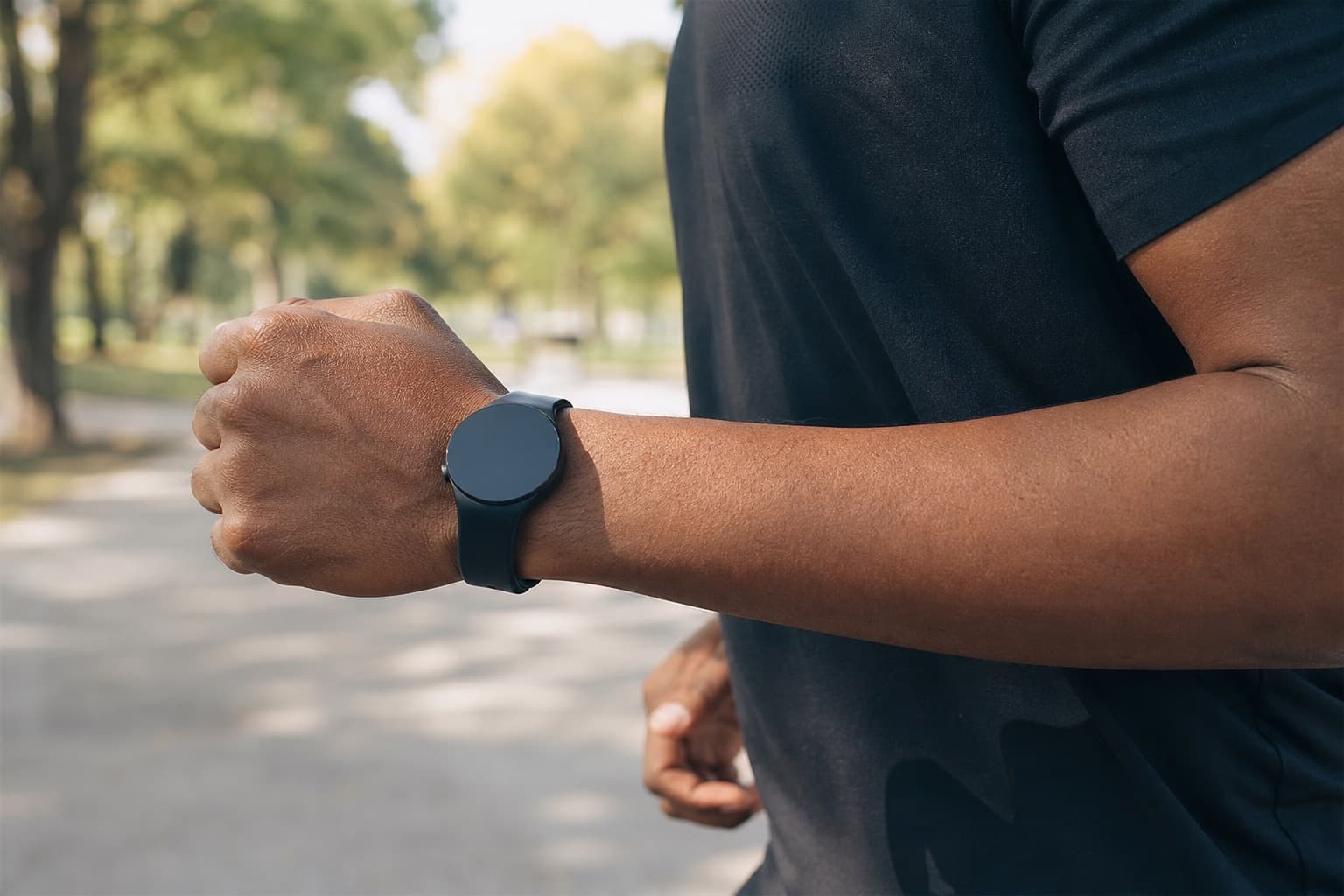
Is Apple Watch VO2 max accurate for runners?
Not very, and it tends to read low. A 2025 validation study put the Apple Watch up against a lab test. The lab method, called indirect calorimetry, reads the air you breathe. The watch only guesses. On average, the watch read about 6 points too low (Lambe et al., 2025).
- 6.07 mL/kg/min
- how much the Apple Watch underestimated VO2 max vs a lab test (Lambe et al., 2025)
The spread was the bigger problem. The study measured the error band from runner to runner. It ran from about 6 points below the watch number to 18 points above it (Lambe et al., 2025). That is a very wide range. For one runner the guess might be close. For the next it could be far off. The average percent error came to 13 percent.
Why so shaky? The watch never measures oxygen. It infers a number from your pace and your pulse. The exact formula is hidden, and it changes with each software update (Lambe et al., 2025). A guess that drifts is fine for a long-term trend. It is weak ground for a race plan. If you want a deeper look at this, read how a wrist VO2 max guess drifts as you get fitter.
Why does one fitness number not equal a race time?
Because a race tests several traits at once, and VO2 max is only one of them. Sport scientists are clear here. A great race needs your oxygen power, your steady hard pace, and your running economy, all working together (Joyner & Coyle, 2008). The Cardio Fitness number covers the first one. It says nothing about the other two.
This is why two runners can share the same VO2 max and finish minutes apart. One may burn less fuel at race pace. One may hold a harder pace before fading. The watch sees the same score for both. The road tells a very different story.
Endurance performance depends on more than maximal oxygen uptake. Running economy and lactate threshold matter just as much. (Joyner & Coyle, 2008)
So a single Cardio Fitness number flattens a runner into one trait. It hides the parts that often decide the race. A real projection has to read all of these traits, not just one. For more on this gap, see why VO2 max is a weak marathon predictor.
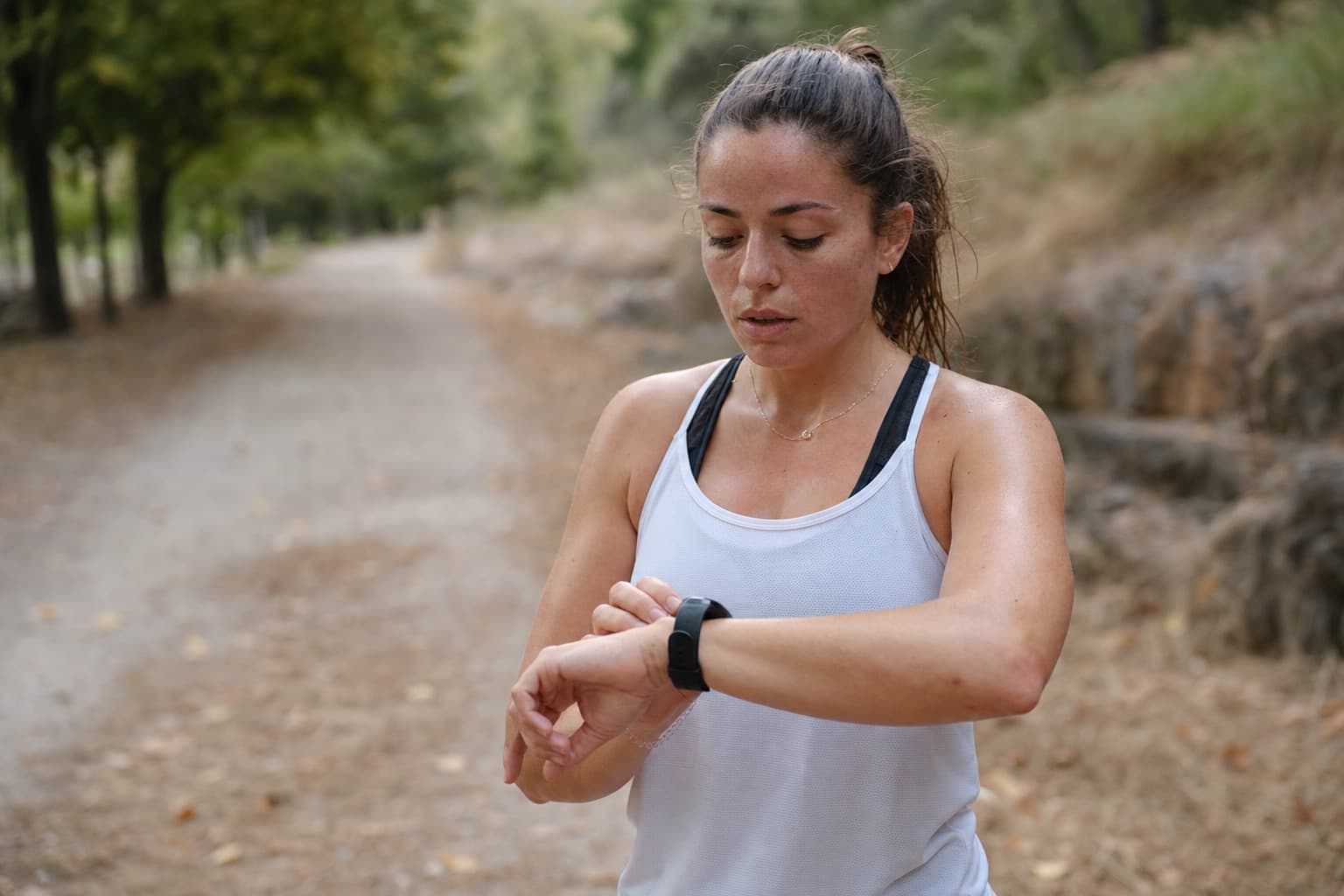
Where do Apple Watch race time numbers come from?
They come from third-party apps, not from Apple. Apple gives the watch a clean way to share data. It is called Apple Health. Many running apps plug into it. They read the runs you have already saved. Then each app runs its own model to guess a finish time.
This is the key point. The race time is only as good as the app behind it. Some apps use one fixed formula for every runner. They take a recent time and scale it up or down. That can be a rough guide. But it treats a speedy 5K runner and a steady marathoner the same way. It cannot see how your own body responds to training. For a marathon goal, start with the marathon race predictor and a recent half or 10K time.
The data itself is fine. Your Apple Watch records solid pace, distance, and heart rate on every run. That raw material is strong enough to build a real projection. The question is what reads it. A simple calculator wastes most of it. A smarter engine uses all of it. You can turn the watch you already own into a projection without buying any new gear.
What does a real race projection actually need?
It needs to read your training, not just one fitness score. A finish time grows out of many habits over many weeks. How much easy volume did you run? How often did you train at a strong, steady pace? Did you do any fast work? Were your weeks even, or full of spikes and gaps? How smoothly do you run?
Each of those questions points to a driver of your race time. No single number can answer all five. The Cardio Fitness score answers part of one. That is the core limit of any Apple-Watch-only race guess. It starts from one trait and tries to cover all of them.
A better method scores each trait on its own. Then it adds the parts up into one honest time. It also updates as your training shifts. That way the number tracks the real you, week to week. A static score frozen in your Health app cannot do that.
How does PIRX turn Apple Watch data into a real projection?
PIRX reads the same runs your Apple Watch already saved, then does far more with them. PIRX is a proprietary machine-learning prediction engine. It is not one fixed formula. You connect your Apple Watch through Apple Health in under a minute. PIRX pulls your run history right away.
Instead of one score, PIRX reads five performance drivers. They are Aerobic Base, Threshold Density, Speed Exposure, Load Consistency, and Running Economy. Each one is scored from your actual runs. Each one adds or costs you seconds. Together they sum to your total change from your baseline. You see the exact math. You see which driver to fix next.
You also get a Projected Time and a Supported Range. The Projected Time is your likely finish. The Supported Range is the honest band around it. PIRX recalculates after every synced activity. A visible change shows only when the structural change is at least 2 seconds. So you see real progress, not daily noise.
- 98%
- validated prediction accuracy (PIRX users)
PIRX also connects more than Apple Watch. It links Garmin, COROS, Polar, Apple Watch, Suunto, WHOOP, Oura, and Strava. Whatever you wear, your history can feed the same engine. For the full picture, read the complete guide to predicting your race time.
Get a real projection from your Apple Watch
Stop reading one fitness score as if it were a race plan. Your Cardio Fitness number is a health signal. It is not a finish time. But the runs behind it hold the real story. Connect your Apple Watch to PIRX through Apple Health in under a minute. See your five drivers. See where your seconds come from. Get a race time built on your own data, not a single guess. It is free, and you do not need a new watch.
Get your own projection in seconds — free, no signup, no wearable.
Race Time PredictorSources
- Lambe et al., 2025, PLOS ONE. Investigating the accuracy of Apple Watch VO2 max measurements: A validation study (Apple Watch underestimated VO2 max by a mean of 6.07 mL/kg/min, with wide limits of agreement and a 13.31 percent mean error versus a lab test.)
- Apple Support, 2025. Track your cardio fitness levels (Apple Watch estimates a Cardio Fitness level, which is a VO2 max estimate from outdoor walk, run, and hike workouts, across a 14 to 65 mL/kg/min range. It is a health metric, not a race-time predictor.)
- Joyner & Coyle, 2008, The Journal of Physiology. Endurance exercise performance: the physiology of champions (Endurance performance depends on maximal oxygen uptake, lactate threshold, and running economy together, not on one number alone.)
Already know your number? Start your 14-day free trial