How to Pace a 10K: Controlled Discomfort in Thirds

On this page
Here is the direct answer. Pace a 10K in three roughly even thirds. Expect steady, controlled discomfort the whole way, not just at the end. Start the first third under control. Hold your goal pace through the middle third, even when it starts to hurt. Push what is left in the final third. Most 10K races are lost in the middle. The early adrenaline fades. The finish still feels far off.
| Segment | Distance | Effort | Target |
|---|---|---|---|
| First third | 0 to 4 km | Controlled, slightly below goal pace | Settle in, do not chase the front |
| Middle third | 4 to 8 km | Steady, controlled discomfort | Hold goal pace, this is where races are lost |
| Final third | 8 to 10 km | Hard, goal pace or faster | Spend what is left |
Get your own projection in seconds — free, no signup, no wearable.
10K Time PredictorHow should you pace a 10K?
Pace a 10K by breaking it into three parts. Treat each part differently. The first third is about control. The middle third is about holding on. The final third is about spending everything you have left. This is different from a 5K. A 5K uses near-even, hard effort for the whole race. It is also different from a marathon. In a marathon, fuel and glycogen become the limit. A 10K sits in between. It is long enough to punish a fast start. It is short enough that you race close to your threshold the whole way.
Most runners think about a 10K as one long effort. It works better as three short races stacked together. Each one has its own job. Treat the first third as a warm-up at speed. Treat the middle third as the real test. Treat the final third as a short, hard race on its own.
A 10K sits at an awkward length for pacing. It is too long to run on adrenaline alone, like a 5K. It is too short to fix a bad start, unlike a marathon. A marathon gives you 20 more miles to recover. A 10K does not. That is why a clear, three-part plan matters here more than in most other race distances.
How do you avoid slowing down in a 10K?
Avoid a 10K slowdown by holding your planned pace through the middle third. Do not react to how you feel in the moment. The middle of a 10K, roughly kilometers 4 through 8, is where most fades start. The early adrenaline is gone by then. The finish is not close enough to pull you forward yet. This is the part of the race where your watch matters more than your emotions do.
Physiology research on 10K performance backs this up. One study looked at trained female runners of different ages. It found two big predictors of a strong 10K. The first was VO2 max, a measure of aerobic engine size. The second was the pace a runner could hold at lactate threshold. Lactate threshold is the effort level where fatigue starts to build fast (Evans et al., 1995). In plain terms, a 10K is raced close to the fastest pace your body can sustain. Drift even slightly above that pace in the middle third. The back half gets much harder than it needs to be.
Think of lactate threshold as a line. You can walk right up to it, but not cross it for long. Stay just under that line for the middle third. Then the final third still has fuel to burn. Cross the line too early, and every kilometer after feels heavier than the last.
A broad 2026 review of pacing across endurance sports adds a related point. Starting too cautiously can hurt final time almost as much as starting too fast (Ramos-Campo et al., 2026). The fix is not extreme caution in the first third. The fix is control. Run close to goal pace from the gun. Stay just a touch under it. That way, you arrive at the middle third with something left to hold.
- 2 factors
- VO2 max and pace at lactate threshold are the strongest predictors of 10K performance (Evans et al., 1995)
What is "controlled discomfort" and why does it matter?
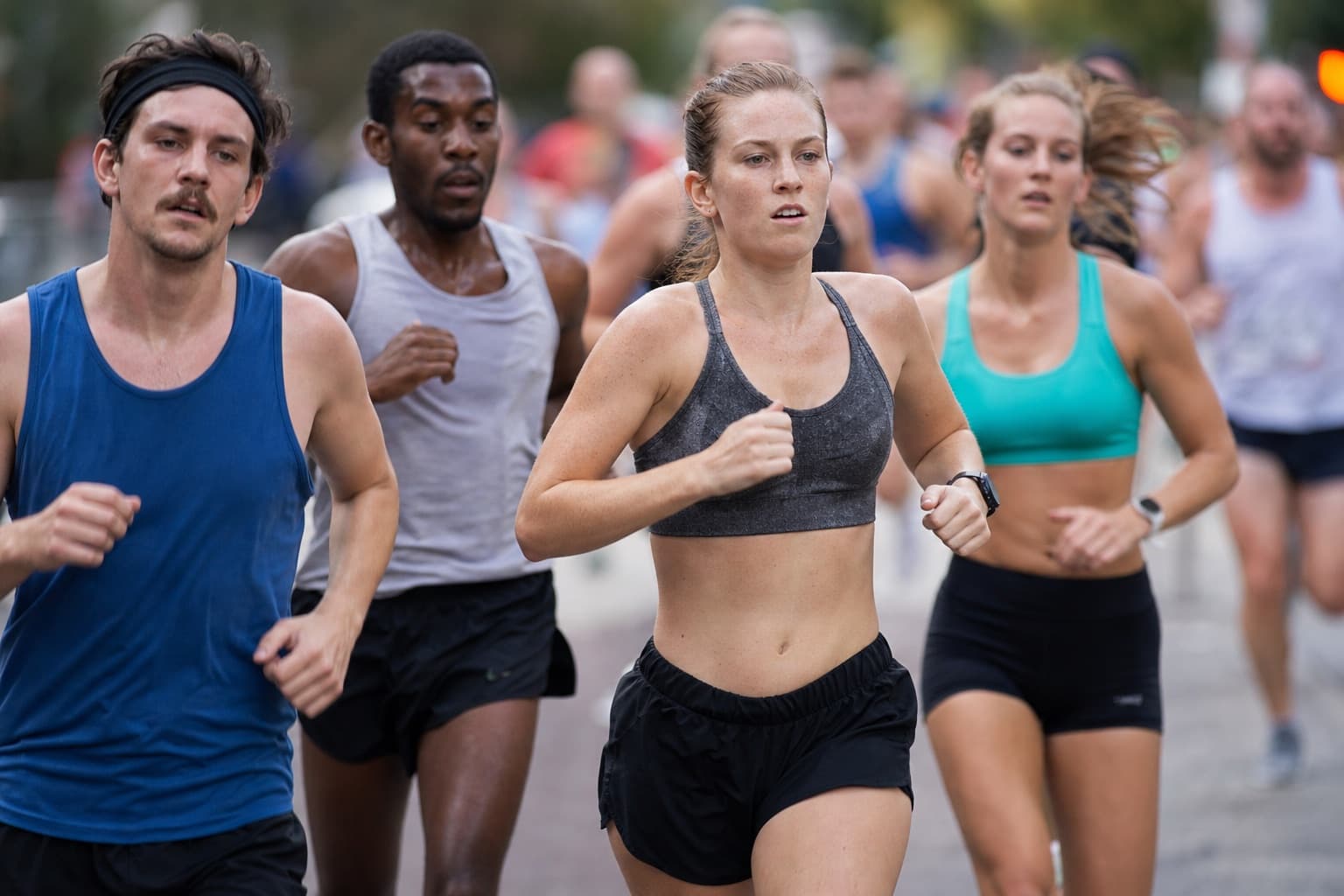
Controlled discomfort is steady, hard effort you choose on purpose. You hold it through the middle of a 10K, not by accident. A 10K does not feel easy at any point. It should feel hard by kilometer 3. It should stay hard until the finish. The skill is not avoiding that discomfort. The skill is staying calm inside it. Hold your planned pace instead of easing off.
This matters because the middle third is where panic creeps in. Your legs feel heavy. Your breathing gets loud. A voice in your head says to slow down. Runners who trained this feeling in workouts know it is normal. It is not a sign that something has gone wrong. Runners who have never felt it before often back off pace. That happens right when they need to hold it most.
One way to practice this is in training. Run intervals at 10K effort with short recoveries. That makes the discomfort of goal pace feel familiar before race day. Race day is not the time to meet that feeling for the first time.
When should you push in a 10K?
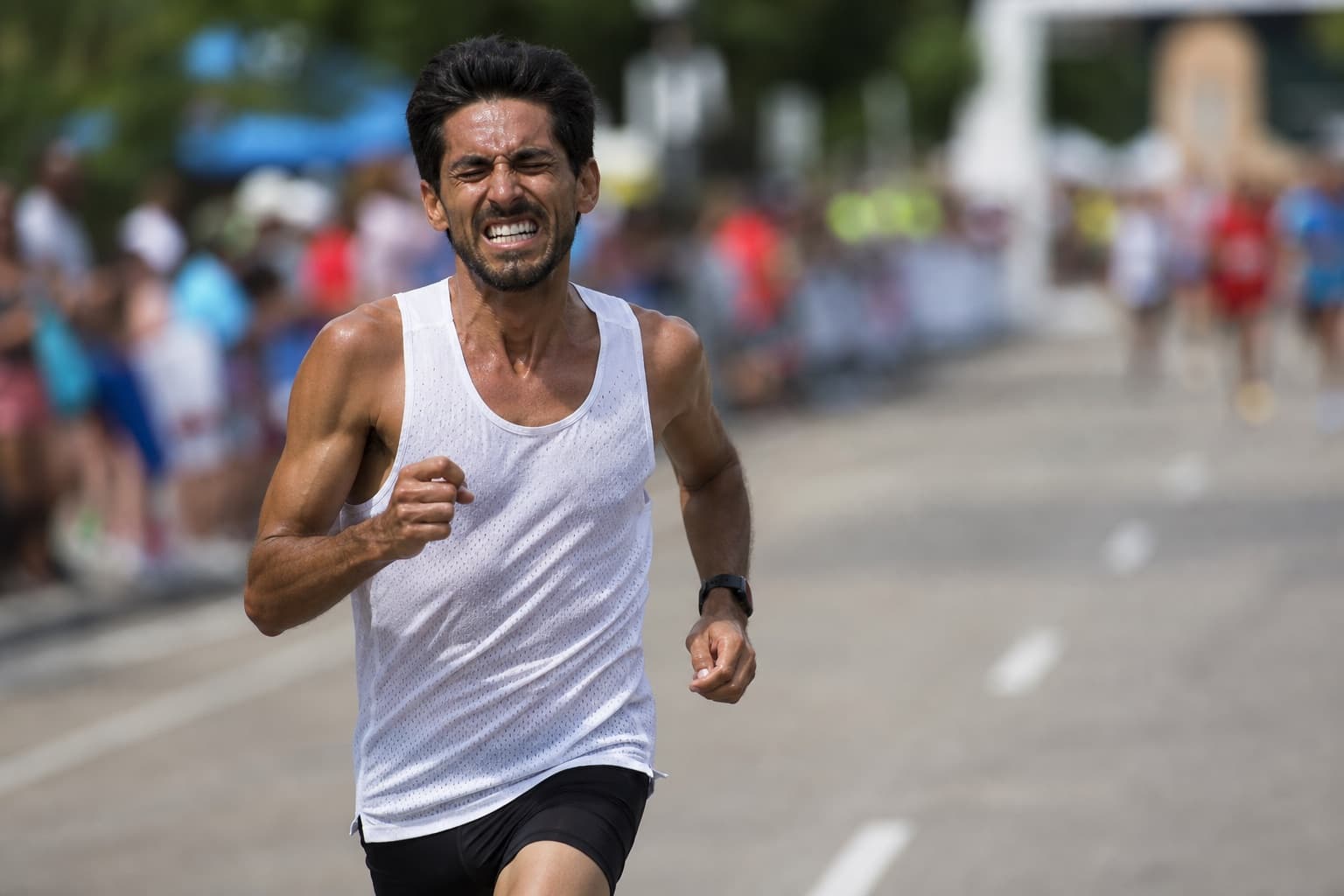
Push hard once you reach the final third, roughly the last 2 to 3 km. Do not push before that. Pushing too early only steals time from the middle third. You need every bit of that controlled effort to hold pace. Once you pass 8 km, you can spend whatever is left. There are no more kilometers to save fuel for.
The math here matters more than it seems. A negative split means your last kilometers are faster than your first. Negative splits link to better late-race pacing. They also link to less glycogen loss than a fast early pace (Grivas, 2025). You do not need a dramatic negative split in a 10K. Even a small one is enough. Aim for a few seconds per kilometer faster at the end than at the start. That small gain usually means you paced the middle correctly.
Does 10K pacing change if this is your first one?
The three-part shape stays the same, but your first-third target should be more cautious. New 10K racers often overestimate their goal pace. A fast 5K time does not always predict a strong 10K. The extra distance exposes weak aerobic fitness. A shorter race can hide that weakness.
If this is your first 10K, treat your first third as a true settle-in phase. Run it a few seconds per kilometer slower than goal pace, not faster. Save the controlled-discomfort test for the middle third. Wait until you trust your legs to hold up for the back half.
Runners who have raced a few 10Ks can afford a tighter, more even first third. They already know how their body handles that middle-third discomfort. They can hold a pace closer to goal from the start.
How does PIRX give you a real 10K target?
A single fixed formula cannot tell you where your lactate threshold sits. It cannot tell you how well your fitness holds up in the middle third of a hard race. PIRX is a proprietary machine-learning prediction engine. It learns from your actual training, instead of applying the same math to every runner. It breaks your fitness into five drivers: Aerobic Base, Threshold Density, Speed Exposure, Load Consistency, and Running Economy. These drivers sum to your total improvement, in seconds. That lets you see exactly which part of your fitness supports a faster middle third.
Two runners with the same 5K time can have very different 10K potential. One might hold pace well once fatigue sets in. The other might fade hard past 6 km. A single fixed formula treats them the same. PIRX does not.
From there, PIRX outputs a Projected Time with a Supported Range for your 10K. That range gives you a target pace for each third of the race. It is built on your own training data, not a guess. Strava shows your history. Garmin shows your splits. PIRX explains why your fitness sits where it does. PIRX users see 98% validated prediction accuracy.
Racing a shorter or longer distance soon? See how to pace a 5K for the even-effort model. Or read how to pace a half marathon for the even-to-negative split approach. Not sure your current pace fits your fitness? Check what is a good running pace first.
Hold your middle third with a real number
Stop guessing your 10K pace based on how you felt last week. Generic watch algorithms treat every runner the same. Your middle-third fade is personal to your own fitness. Connect your Garmin, COROS, or Strava to PIRX in under 30 seconds. See your five performance drivers. Find out where your seconds come from. Get a Projected Time built for the way you actually race, not a one-size-fits-all calculator.
Get your own projection in seconds — free, no signup, no wearable.
10K Time PredictorSources
- Evans, S.L., Davy, K.P., Stevenson, E.T. & Seals, D.R. (1995). Physiological determinants of 10-km performance in highly trained female runners of different ages. Journal of Applied Physiology. (VO2 max and running velocity at lactate threshold are the strongest predictors of 10-km performance.)
- Ramos-Campo, D.J., Foster, C., Andreu-Caravaca, L., Rubio-Arias, J.Á. & Rosenblat, M.A. (2026). Comparative effects of pacing strategies on endurance performance: a systematic review and network meta-analysis. Sports Medicine. (Excessively cautious slow starts were linked to worse endurance performance.)
- Grivas, G.V. (2025). The physiology and psychology of negative splits: insights into optimal marathon pacing strategies. Frontiers in Physiology. (Negative and even pacing conserve glycogen and reduce fatigue late in a race.)
Already know your number? Start your 14-day free trial