How to Pace a 5K: Even Effort vs. the Fast-Start Trap

On this page
Here is the direct answer. Pace a 5K close to even effort, with only a small, controlled fast start, never an all-out sprint. A 5K is short enough that you hold hard effort the whole way. Studies show a modest fast start, about 3 to 6 percent quicker than goal pace for the first kilometer, does not cost you time. It can even help. The trap is a different kind of fast start: sprinting off the line at a pace you cannot hold. That mistake wrecks more 5Ks than anything else.
| Strategy | First half | Second half | Best for |
|---|---|---|---|
| Even | Goal pace, km by km | Goal pace, km by km | First-time 5K racers |
| Controlled positive | 3-6% faster for km 1, then goal pace | Goal pace, with a late kick | Racers who know their fitness |
| Uncontrolled positive (the trap) | An all-out sprint off the line | A hard crash by km 3 | Nobody, the most common mistake |
Get your own projection in seconds — free, no signup, no wearable.
5K Time PredictorHow should you pace a 5K?
Pace a 5K at close to even effort. Break it into kilometers. Hold steady effort in each one. A small surge at the start is fine. A marathon is long. Any early speed there costs you late. A 5K is short. Near-even, hard effort works from start to finish. The whole race lasts 15 to 30 minutes for most runners. There is no room to coast, and no time to recover from a bad early mile.
This is why 5K pacing looks different from marathon pacing. In a marathon, the rule is simple. Never start fast. In a 5K, a small, planned surge at the start is backed by research. It does not cost you the race. The key word is small. A surge is not a sprint. A surge is a plan. A sprint is panic.
Most runners who race a 5K well share one habit. They know their goal pace before the gun goes off. They do not find out what pace feels right by guessing at the start line. A number from your own training beats a number pulled from a friend's race or a generic pace chart.
Should you start fast in a 5K?
A small, controlled fast start can help in a 5K, but a sprint start will hurt you. Researchers tested trained women runners over three pacing plans for the first 1.6 km (1 mile) of a 5K: even pace, 3 percent faster than goal pace, and 6 percent faster than goal pace. Total 5K times were not slower in the faster-start trials. In fact, most runners ran their fastest 5K in the 6 percent trial (Gosztyla et al., 2006).
That does not mean sprint off the line. A 6 percent surge is small. For a 24-minute 5K goal, that is 4:48 per km on average. Six percent faster is about 4:31 per km. That is only 17 seconds quicker for one kilometer. An all-out sprint is far faster than that. It burns fuel your legs need for the last two kilometers.
- 3-6%
- faster than goal pace for km 1 produced the best 5K times in controlled testing (Gosztyla et al., 2006)
A large 2026 review looked at pacing across many endurance sports. It found something else useful. A slow, cautious start can also hurt you. The longer a runner held back at the start, the more it hurt final time (Ramos-Campo et al., 2026). So the goal is not caution. The goal is control. Do not start too slow. Do not sprint. A small, planned surge is the sweet spot.
Think of it like a car merging onto a highway. You speed up a little to match the flow. You do not floor the gas pedal and lose control. The first kilometer of a 5K works the same way.
What do km-by-km 5K targets look like?
Good 5K targets are close to even, with a slightly faster first kilometer and a hard final push. Take a runner aiming for 24:00, an average pace of 4:48 per km. Here is one way to break that down:
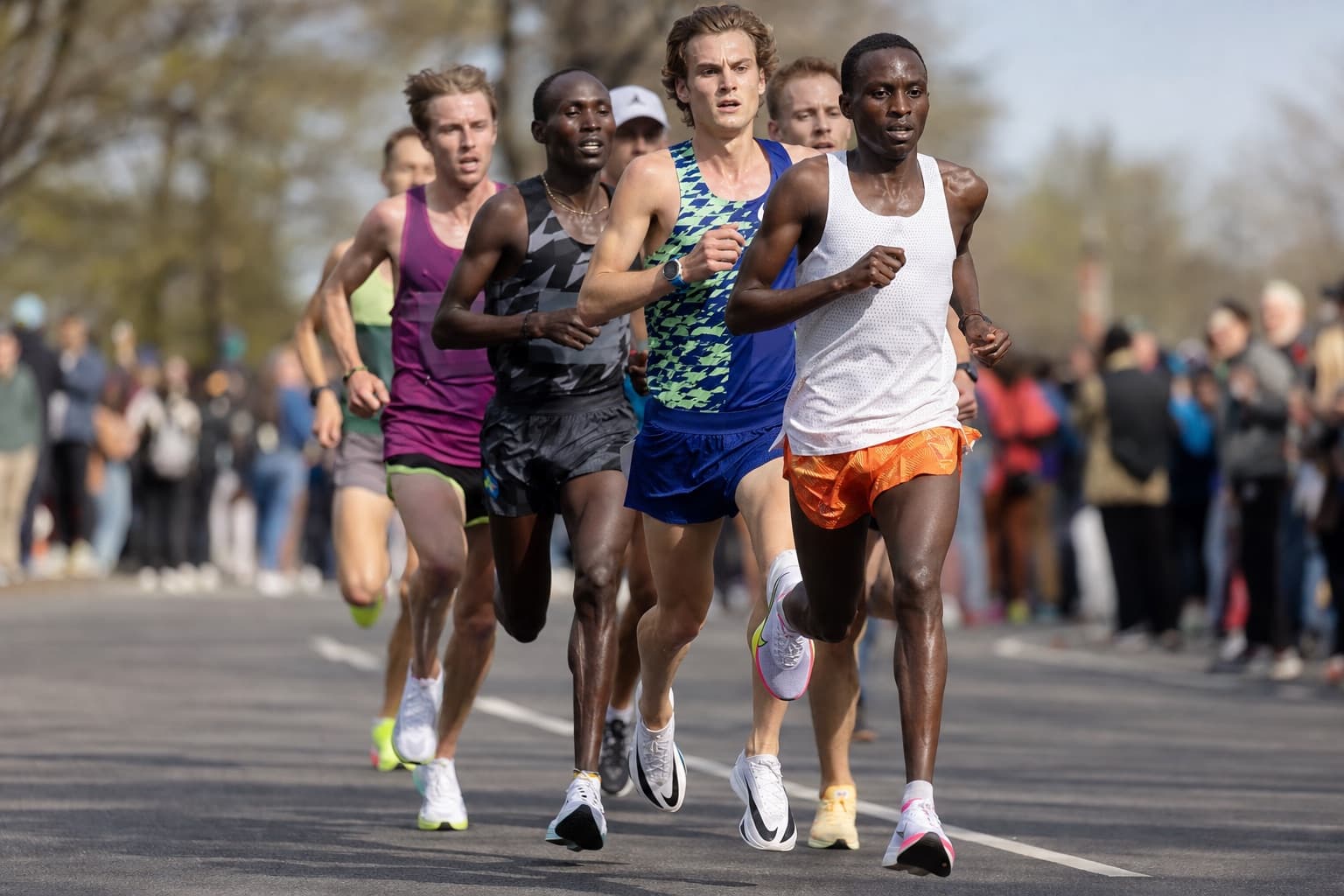
- Km 1: 4:35 to 4:40. A small, controlled surge. Not a sprint.
- Km 2: 4:48 to 4:50. Settle into rhythm.
- Km 3: 4:50 to 4:52. This is where it starts to hurt. Hold the pace.
- Km 4: 4:50 to 4:52. The hardest, least exciting kilometer. Stay steady.
- Km 5: 4:40 to 4:48. Empty the tank if you have anything left.
Kilometer 3 and 4 are where most runners fade. There is no crowd energy left. The finish line is not close enough to see yet. This is the part of the race where a real pace target, not a hopeful guess, keeps you honest.
If your goal time is different, the shape stays the same. Run the first kilometer a touch quicker than your average. Hold the middle three kilometers steady. Save something for the last 800 meters. That shape works whether your goal is 18 minutes or 32 minutes.
Why does a 5K hurt more than a longer race?
A 5K hurts because you race it near your top aerobic effort for the whole distance. In a marathon, you run well under your maximum. Fuel and pacing errors take miles to show up. In a 5K, you sit close to your redline from kilometer 1. A pacing mistake shows up fast, often within 60 seconds.
This is also why the fast-start trap is so common in 5Ks. Adrenaline at the start line feels like fitness. Your legs feel fresh, and goal pace feels too slow. That feeling is not reliable. The runners flying past you in kilometer 1 are often the same runners you pass back in kilometer 4.
A short race also punishes a wrong goal time more than a long one does. If your marathon goal is 5 minutes too ambitious, you have 26 miles to adjust. If your 5K goal is 20 seconds too ambitious, you find out in the first kilometer, and there is little time left to fix it.
Does 5K pacing change for beginners?
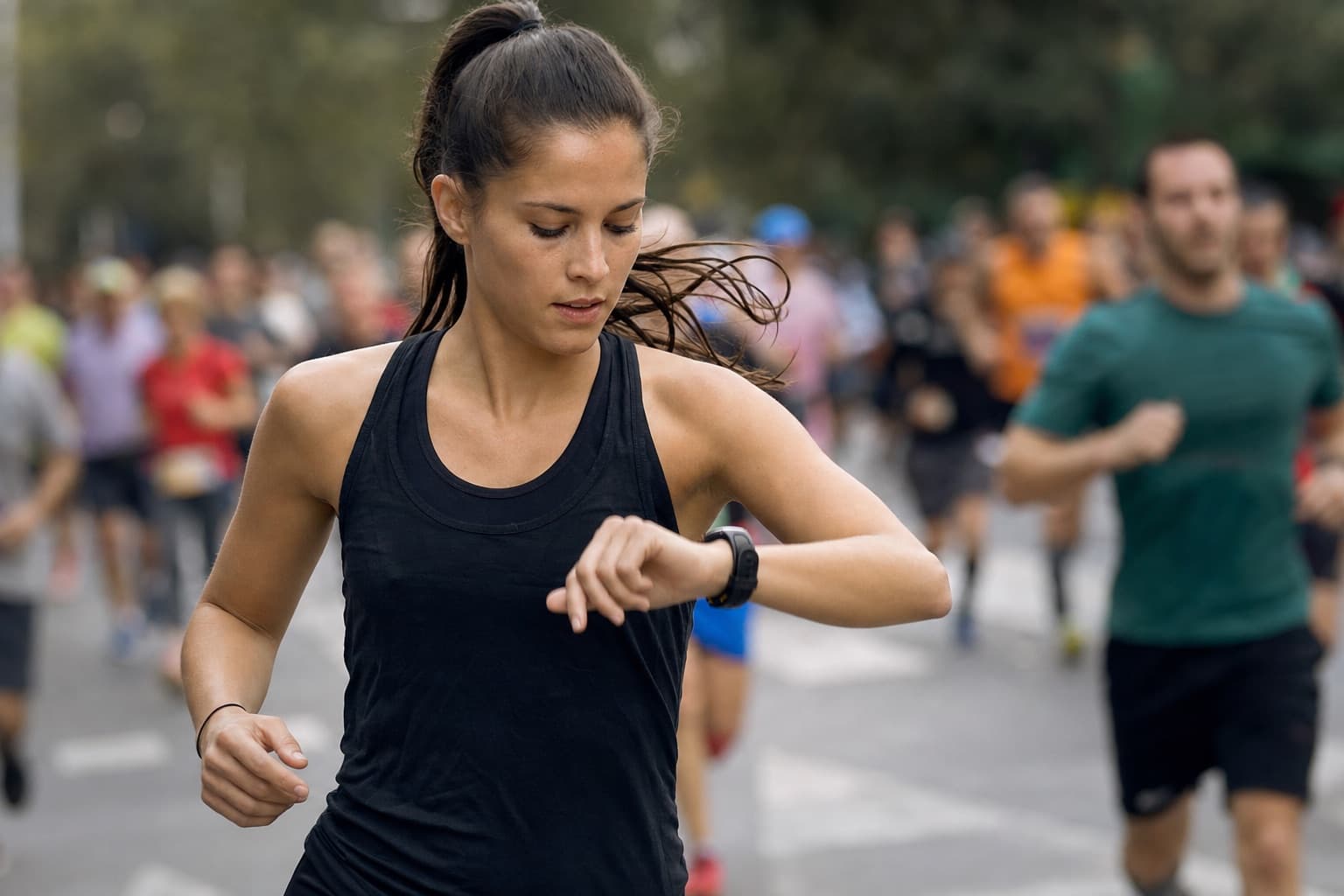
The shape of the plan stays the same, but the margin for error grows. New runners often have a less accurate sense of their real fitness. That makes an honest starting number even more important. Guessing high leads straight into the fast-start trap. Guessing low wastes fitness you already have.
If this is your first 5K, aim for even effort and skip the surge entirely. Save the small, controlled fast start for once you have a few 5Ks under your belt and know how your body responds late in a race.
How does PIRX set your 5K target pace?
A single fixed formula treats every runner the same. It does not know if you are strong at holding pace or fast but quick to fade. PIRX is a proprietary machine-learning prediction engine that learns your own training instead. It breaks your fitness into five drivers: Aerobic Base, Threshold Density, Speed Exposure, Load Consistency, and Running Economy. Together, these drivers sum to your total improvement, in seconds. They show exactly where your fitness stands today, and which part of your training moved the needle.
Two runners can post the same recent 10K time and still need very different 5K pacing plans. One might have deep aerobic fitness but limited top-end speed. The other might have sharp speed but a shallow aerobic base. A single fixed formula cannot tell them apart. It gives both runners the same target and the same splits.
From there, PIRX gives you a Projected Time with a Supported Range for your 5K. Your kilometer splits come from real training data, not a guess. Strava tells you what you did. Garmin shows your numbers. PIRX explains why your fitness sits where it does and what your next race should look like, with 98% validated prediction accuracy across PIRX users.
Want to see how the same idea plays out over a longer distance? Read how to pace a 10K or how to pace a half marathon. Not sure what pace fits your current fitness? Check what is a good running pace first.
Race your 5K with a real number
Stop guessing your goal pace from a race you ran months ago. Generic watch algorithms treat every runner the same, even though your fade pattern is personal. Connect your Garmin, COROS, or Strava to PIRX in under 30 seconds. See your five performance drivers, find out where your seconds come from, and get a Projected Time built on your own training, not a one-size-fits-all calculator.
A good 5K plan is short and simple: know your number, hold your effort, and save a little for the last 800 meters. The hard part is trusting the plan when adrenaline says to go faster. A real, personal target makes that easier, because you know the number is built for you, not for the average runner on the start line next to you.
Get your own projection in seconds — free, no signup, no wearable.
5K Time PredictorSources
- Gosztyla, A.E., Edwards, D.G., Quinn, T.J. & Kenefick, R.W. (2006). The impact of different pacing strategies on five-kilometer running time trial performance. Journal of Strength and Conditioning Research. (Starting 3-6% faster than goal pace for the first 1.6 km did not slow 5K finish time, and most runners ran fastest in the 6% trial.)
- Ramos-Campo, D.J., Foster, C., Andreu-Caravaca, L., Rubio-Arias, J.Á. & Rosenblat, M.A. (2026). Comparative effects of pacing strategies on endurance performance: a systematic review and network meta-analysis. Sports Medicine. (Prolonged slow starts were linked to worse endurance performance across sports.)
- Pearson, R. (2025). Why you should 'positive split' a parkrun, but not a marathon. Runner's World UK. (Applies the controlled fast-start research to real 5K and parkrun racing.)
Already know your number? Start your 14-day free trial