What to Eat Before a Race: The Morning Plan
On this page
Here is the short answer. Eat a high-carb, low-fat, low-fiber meal 2 to 4 hours before your race, aiming for 1 to 4 grams of carbs per kilogram of body weight. The closer you eat to the start, the smaller and simpler that meal should be.
The table below shows what to eat at each point before the gun.
| Hours before start | What to eat | Carb amount | Example foods |
|---|---|---|---|
| 3-4 hours | Full meal | 1-4 g/kg body weight | Oatmeal, toast, banana, eggs |
| 2-3 hours | Smaller meal | 1-3 g/kg body weight | Bagel, rice, low-fiber cereal |
| 1-2 hours | Light snack | About 1 g/kg body weight | Banana, white toast, sports drink |
| 30-60 min | Small top-up | 15-30 g carbs | Gel, chews, small handful of pretzels |
Get your own projection in seconds — free, no signup, no wearable.
Race Time PredictorHow many carbs should you eat before a race?
Aim for 1 to 4 grams of carbs per kilogram of body weight. This range comes from a review of pre-race fueling studies (Naderi et al., 2023). It also matches guidance used for elite distance runners. This includes race walkers too (Burke et al., 2019).
- 1-4 g/kg
- carbs per kg of body weight, eaten 1 to 4 hours before a race
For a 65 kg (143 lb) runner, that works out to roughly 65 to 260 grams of carbs. The wide range exists on purpose. More time before the start allows a bigger meal. Less time before the start calls for a smaller one. Match your meal size to your remaining hours.
What is the best race-day breakfast?
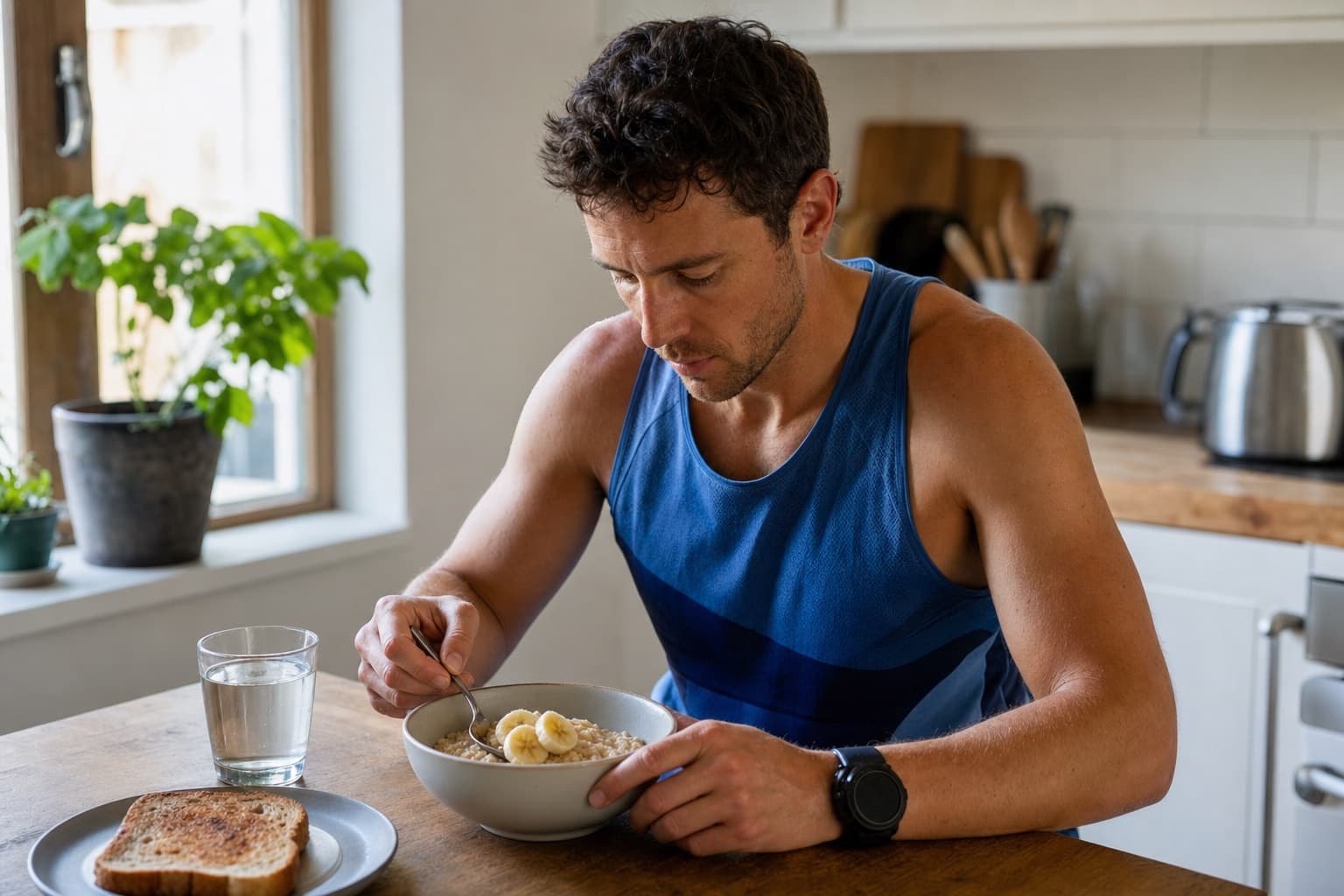
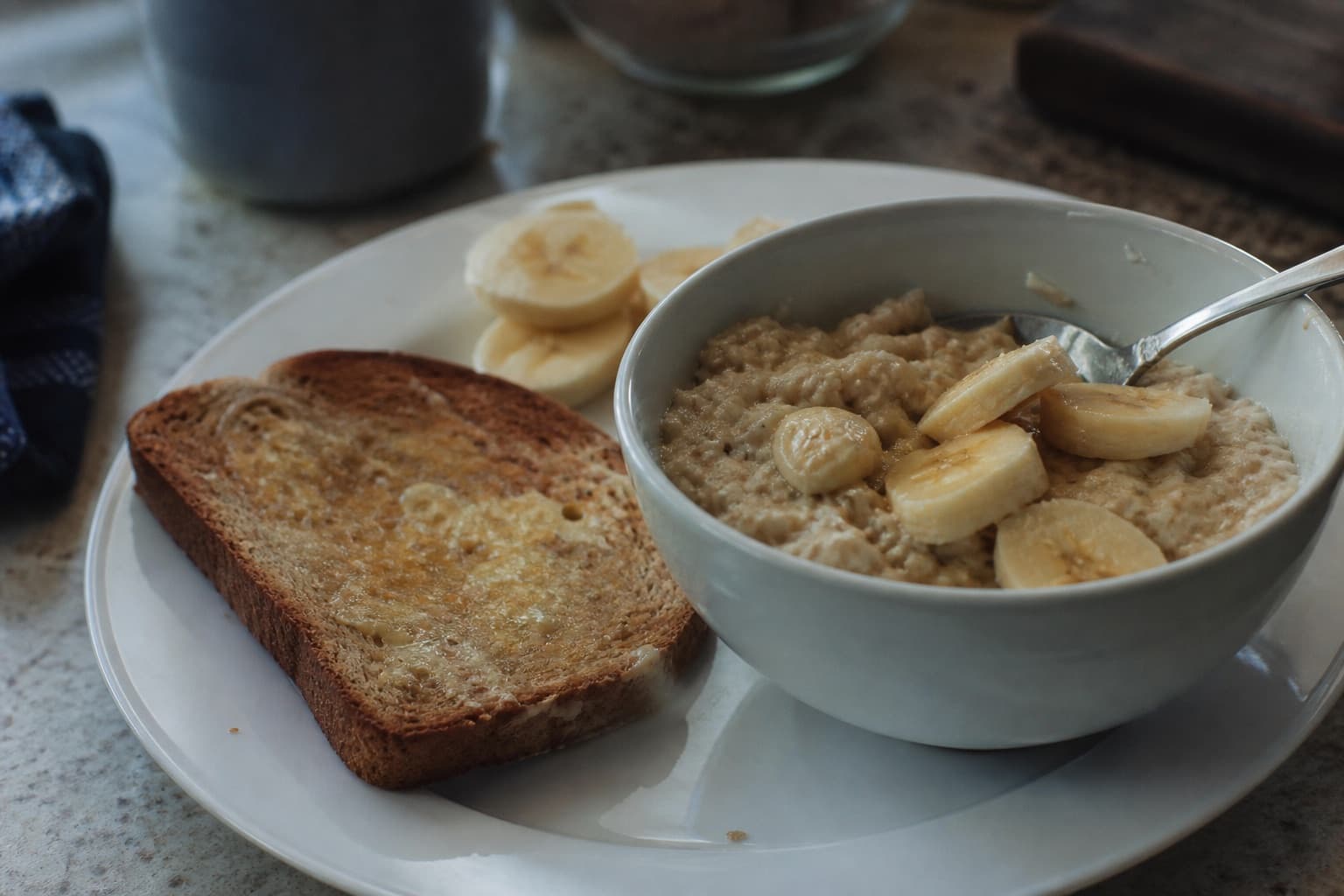
The best breakfast is simple, familiar, and carb-heavy. Oatmeal with banana, toast with honey, or a bagel with jam are all solid picks. White rice with a little soy sauce works too, if that fits your taste. The goal is fuel your stomach already trusts, not a fancy new meal.
Keep fat and protein modest at breakfast. Both slow down digestion. A slow gut on race morning can mean nausea or a heavy feeling at the start line. Save your usual bacon-and-eggs breakfast for a non-race day.
Coffee is fine for most runners, in your normal amount. Do not double your usual coffee intake hoping for a boost. New amounts of caffeine can upset a nervous stomach on race morning.
How long before a race should you eat?
Eat your main meal 2 to 4 hours before the start. This window gives your stomach time to mostly empty. A full stomach feels heavy once you start running. It can also cause cramping or nausea.
If you wake up less than 2 hours before your race, keep it small. A banana, a slice of toast, or a small bowl of cereal works well. Save the bigger meal idea for next time, and top up closer to the start with a gel or sports drink instead.
Practice this timing in training first. Try your race-morning meal before a hard long run, not for the first time on race day. Your gut needs practice just like your legs do.
What should you avoid eating before a race?
Avoid high-fiber foods right before a race. Beans, bran cereal, and raw vegetables can cause gas and stomach cramps mid-run. Save these foods for your normal, non-race days.
Avoid high-fat and fried foods too. Fat slows digestion and can sit heavy for hours. A greasy breakfast sandwich might taste great. It is still a poor choice on race morning.
Avoid anything brand new. This is not the time to try a food you have never eaten. Even healthy new foods can upset your stomach under race stress. Race nerves make your gut more sensitive than usual. Stick to what you already know works for you.
Spicy food is another one to skip. Spice can irritate your stomach even on a normal day. Combined with race-day nerves, it is a common trigger for mid-race gut trouble.
Does this change for a 5K versus a marathon?
The core plan stays similar, but the stakes are lower for shorter races. A 5K or 10K is over quickly. Your body can coast on stored fuel the whole way. A light, familiar breakfast is enough. Skimping slightly will not hurt you much over 20 to 40 minutes of running.
A half marathon or marathon raises the stakes. These races last 1.5 to 5 or more hours. Running low on fuel becomes a real risk late in the race. Getting your pre-race meal right matters more the longer your race gets. Pair a proper breakfast with an in-race fueling plan for these distances.
Think of your pre-race meal as the first mile of fuel. Your in-race gels and drinks are the miles after that. Skip breakfast, and you start the race already behind on fuel. That gap is hard to close once the gun goes off.
What if you feel too nervous to eat?
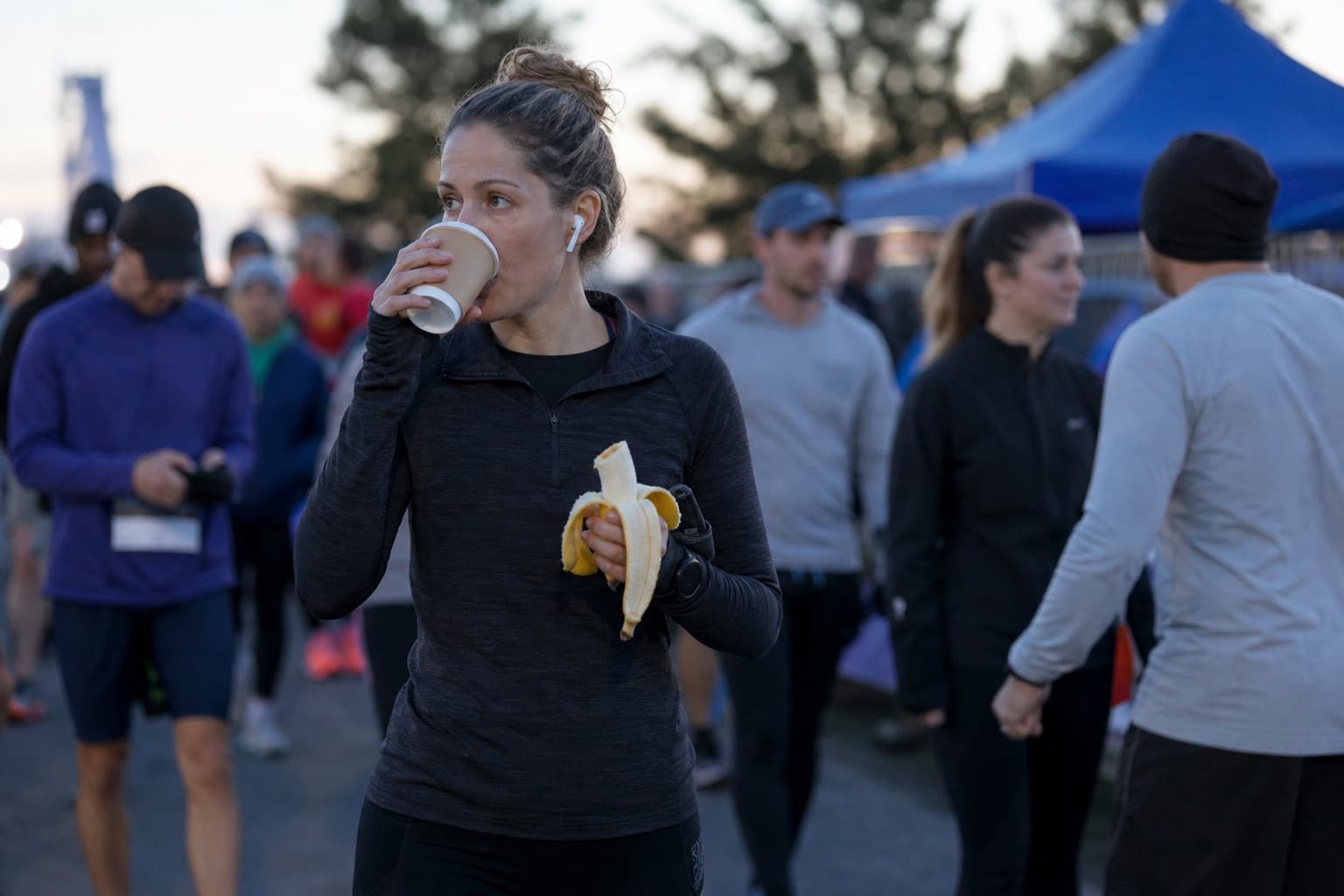
Nerves are normal on race morning. Many runners feel less hungry before a big race. Your body sends blood to your muscles, not your stomach. Food can feel hard to face. This happens even when you know you need it.
Try liquid calories if solid food feels hard to face. A sports drink or juice can carry carbs too. So can a liquid meal replacement. Liquids often feel easier to get down when your stomach feels off.
Break your meal into small bites instead of eating it all at once. Try a few bites every 15 minutes. This can feel easier than one big plate. It spreads digestion out over time. It also eases the pressure of forcing down a full meal fast.
Practice this in training too. Learn how your appetite reacts before a hard effort. Race-morning nerves feel stronger than a normal Tuesday long run. But the pattern is often similar. Your training runs are a safe place to test what works.
Should hot weather change your breakfast?
Hot race mornings call for a bit more caution with your meal. Heat already stresses your gut once running starts. A heavy breakfast adds extra digestion on top of that stress. Lean toward simpler, lighter carb choices on hot mornings.
Cold, easy-to-drink options can help too. A cold smoothie is often easier than a warm bowl of oatmeal. A chilled sports drink works the same way. Both can also help cool your body before the gun even goes off.
Do not skip breakfast entirely because of heat, though. Running with no fuel is worse than running with a light meal. Aim for something small, cool, and easy on your stomach instead of nothing at all. A little fuel beats no fuel, even on the hottest race mornings.
Should you drink water with your pre-race meal?
Yes, drink normally with your meal, not extra. A glass of water with breakfast helps digestion. It also starts your race well hydrated. Just do not fill your stomach with too much water before the start.
Avoid chugging large amounts of water right before the gun. This can leave you feeling sloshy once you start running. Sip steadily in the hours before the race instead of drinking it all at once late.
Check your urine color as a simple guide. Pale yellow before the start is a good sign. Very dark means drink a little more. Fully clear means ease off the fluids.
Why a fixed pre-race meal plan is not the whole answer
A pre-race meal plan tells you what to eat. It cannot tell you how fit you are. It cannot tell you what pace you can hold either. Those two things decide how much your meal actually matters on race day.
PIRX is a proprietary machine-learning prediction engine. It learns from your own training data. It does not guess with one formula for everyone. It breaks your fitness into 5 drivers. These are Aerobic Base, Threshold Density, Speed Exposure, Load Consistency, and Running Economy. They sum to your total improvement, in seconds. PIRX then gives you a Projected Time with a Supported Range. Your fueling plan can then match a real target, not a guess.
"Breakfast fuels the engine. It cannot tell you how far the engine can go." That is the gap PIRX fills. With 98% validated prediction accuracy (PIRX users), you get a finish-time estimate worth building your morning plan around.
Racing longer than a 5K? Pair your breakfast plan with your in-race fueling. See how many gels for a marathon or half marathon fueling for the miles after breakfast wears off. Also check carb loading before a marathon if your race is more than a day away.
Stop guessing what your training is worth. Don't rely on generic watch algorithms that treat every runner the same. Connect your Garmin, COROS, or Strava to PIRX in under 30 seconds. See your 5 performance drivers, and get your race-time projection. Then plan your race morning around a number you can trust.
Get your own projection in seconds — free, no signup, no wearable.
Race Time PredictorSources
- Naderi, A. et al. (2023). Carbohydrates and endurance exercise: a narrative review of a food first approach. Nutrients. (1-4 g/kg of carbohydrate is generally recommended 1 to 4 hours before endurance exercise.)
- Burke, L.M., Jeukendrup, A.E., Jones, A.M. & Mooses, M., in International Association of Athletics Federations (2019). Consensus Statement 2019: Nutrition for Athletics. International Journal of Sport Nutrition and Exercise Metabolism. (Pre-race meal guidance of 1-4 g/kg carbohydrate 1-4 hours before the race, with reduced fat and fiber.)
- Mata, F. et al. (2019). Carbohydrate availability and physical performance: physiological overview and practical recommendations. Nutrients. (Low-glycemic-index carbohydrate 1-4 g/kg, 1 to 4 hours before exercise, supports performance.)
Already know your number? Start your 14-day free trial